Table of Contents
Legal Peptide Use for Recovery and Musculoskeletal Care
Abstract
Peptide therapy has become a growing topic in metabolic medicine, functional medicine, injury recovery, weight management, and wellness care. However, the word “peptide” covers many different substances, and they do not all have the same legal status. Some peptide-based medications are approved by the U.S. Food and Drug Administration (FDA). Others may be compounded under limited federal and state rules, while some substances discussed online remain investigational or are not approved for routine human treatment.
A responsible integrative approach begins with the legal status of the exact product, a proper medical evaluation, informed consent, qualified prescribing, licensed pharmacy involvement when needed, and continued monitoring. Chiropractic care and rehabilitation can then work alongside appropriate medical treatment by improving movement, biomechanics, strength, and musculoskeletal function. This article explains legal peptide use and how a multidisciplinary medical-chiropractic team can coordinate care safely.

What Does Legal Peptide Use Mean?
Peptides are short chains of amino acids. The human body naturally uses many peptides as signaling molecules. Insulin, for example, is a peptide hormone. GLP-1 is another naturally occurring peptide involved in appetite, glucose regulation, and metabolism.
In medical care, legal peptide use should not be understood as meaning that every substance called a peptide is approved or available for treatment.
Instead, lawful clinical use generally falls into pathways such as:
- An FDA-approved peptide-based prescription medication.
- An approved drug prescribed off-label when legally and clinically appropriate.
- A compounded medication prepared under applicable federal and state compounding rules for a legitimate patient-specific medical need.
- An investigational product used through a legally authorized research pathway.
FDA-approved drugs have completed the agency’s formal review process. Compounded medications are different. The FDA specifically states that compounded drugs are not FDA-approved, meaning the agency does not review each compounded drug for safety, effectiveness, or quality before marketing (FDA, 2026a).
This distinction matters greatly when discussing peptide therapy.
Not Every Peptide Found Online Is a Legal Medical Treatment
Patients may see products such as BPC-157, TB-500, MOTS-c, KPV, CJC-1295, ipamorelin, sermorelin, GHK-Cu, or other compounds discussed on wellness websites and social media.
Being available online does not automatically mean a product is FDA-approved, legally compoundable, or appropriate for human treatment.
Legal analyses from Holt Law, ByrdAdatto, LumaLex Law, and other regulatory resources make the same basic point: peptide legality depends on the specific substance, intended use, FDA status, compounding pathway, state law, professional scope of practice, pharmacy regulations, and the way the product is marketed (Holt, 2026; ByrdAdatto, 2026; LumaLex Law, 2026).
Healthline also distinguishes FDA-approved peptide medications from non-approved research chemicals and stresses the importance of obtaining legitimate prescription products through licensed healthcare and pharmacy channels (Swearingen, 2026).
The FDA’s 2026 Peptide Review Does Not Equal FDA Approval
The peptide regulatory environment continues to change.
In July 2026, the FDA’s Pharmacy Compounding Advisory Committee reviewed substances including BPC-157, KPV, TB-500, MOTS-c, Semax, Epitalon, and related forms for possible inclusion on the Section 503A Bulks List. However, an advisory committee recommendation is non-binding. It does not by itself make a peptide FDA-approved, nor does it automatically authorize pharmacies to compound that peptide (FDA, 2026b).
The FDA has also published safety concerns about substances such as BPC-157, including limited human safety information, possible immunogenicity, and concerns about peptide impurities and active pharmaceutical ingredient characterization (FDA, 2026c).
Therefore, providers should verify the current FDA status of the specific peptide and formulation rather than relying on a general statement that “peptides are legal.”
What the New Mexico Board of Nursing Says
The September 2026 Peptide Therapies New Mexico Board of Nursing Clinical Practice Frequently Asked Questions offers useful guidance for APRNs.
Importantly, the document states that its FAQs provide general interpretations and are not legal opinions or legal authority. They do not replace the New Mexico Nursing Practice Act or Board regulations.
The Board explains that APRNs may prescribe compounded medications when doing so falls within their education, experience, population focus, and prescriptive authority. The APRN must have clinical justification and a valid patient-provider relationship. The Board also stresses appropriate training, follow-up, baseline and interval laboratory monitoring, and the use of compounding pharmacies that comply with regulatory and safety standards.
For compounded GLP-1 medications, the document further emphasizes patient-specific prescribing and dispensing. It recommends informing patients when a medication is compounded rather than an FDA-approved commercial product and documenting the clinical reason for using the compounded product.
The New Mexico guidance should not be interpreted as blanket authorization for every peptide mentioned in the document. The FAQ discusses substances such as NAD+, sermorelin, BPC-157, and PT-141 in a question, but the legal and clinical status of each product must still be evaluated separately.
A Proper Peptide Consultation Comes Before the Prescription
The New Mexico Board guidance provides a useful model for responsible patient evaluation.
Before initiating applicable therapy, a provider should consider:
- Complete medical and medication history.
- Current diagnoses and contraindications.
- Appropriate physical examination.
- Baseline laboratory testing when clinically indicated.
- Risks, potential benefits, and treatment alternatives.
- Informed consent.
- Documentation of the medical reason for treatment.
- Follow-up laboratory testing and clinical monitoring when needed.
For GLP-1 treatment, the Board specifically recommends continued evaluation of weight, body composition when appropriate, nutritional health, medication tolerance, adverse effects, treatment response, and the possible need for dosage adjustment or discontinuation.
This illustrates why peptide treatment should not be reduced to ordering a vial online and choosing a dose.
How Chiropractic Care Fits Into Peptide Treatment
Integrative chiropractic care addresses a different part of the recovery process.
Medication may influence a biological pathway, but muscles, joints, tendons, ligaments, and the nervous system still need appropriate movement and progressive physical loading.
Chiropractic and rehabilitation programs may focus on:
- Restoring joint and spinal mobility.
- Improving biomechanics and movement patterns.
- Reducing mechanical stress on injured tissues.
- Progressive strengthening.
- Neuromuscular control and stability.
- Flexibility and mobility.
- Gradual return to work, sports, and normal activity.
This is why peptide therapy, when medically appropriate, should be viewed as an adjunct rather than a replacement for rehabilitation.
Integrative chiropractic sources describe this same rehab-first model. Gruber Chiropractic and ProCredits, for example, discuss peptide therapy within broader plans that include manual treatment, progressive rehabilitation, sleep, protein intake, exercise, and musculoskeletal recovery rather than presenting peptides as stand-alone treatments (Gruber Chiropractic & Integrative Medicine, 2026; Annunziata, 2025).
Strength and Muscle Preservation Matter
Muscle health becomes especially important when people use metabolic peptide medications for weight management.
The New Mexico Board specifically advises counseling patients receiving GLP-1 therapy on adequate protein intake, resistance exercise, lean body mass preservation, vitamins, nutrients, and long-term lifestyle changes. Failure to address muscle preservation may contribute to sarcopenia, frailty, and poorer outcomes.
This creates an important connection between medical treatment and chiropractic rehabilitation.
A coordinated program may combine medical management with resistance exercise, corrective movement, protein-focused nutrition, and rehabilitation designed to help the patient maintain or rebuild muscle.
The goal is not to claim that chiropractic manipulation makes a peptide work better. Instead, the two sides of care address different problems: medical therapy addresses appropriate biological or metabolic targets, while chiropractic rehabilitation addresses movement, mechanical function, conditioning, and strength.
The Injury Medical Clinic PA Multidisciplinary Model
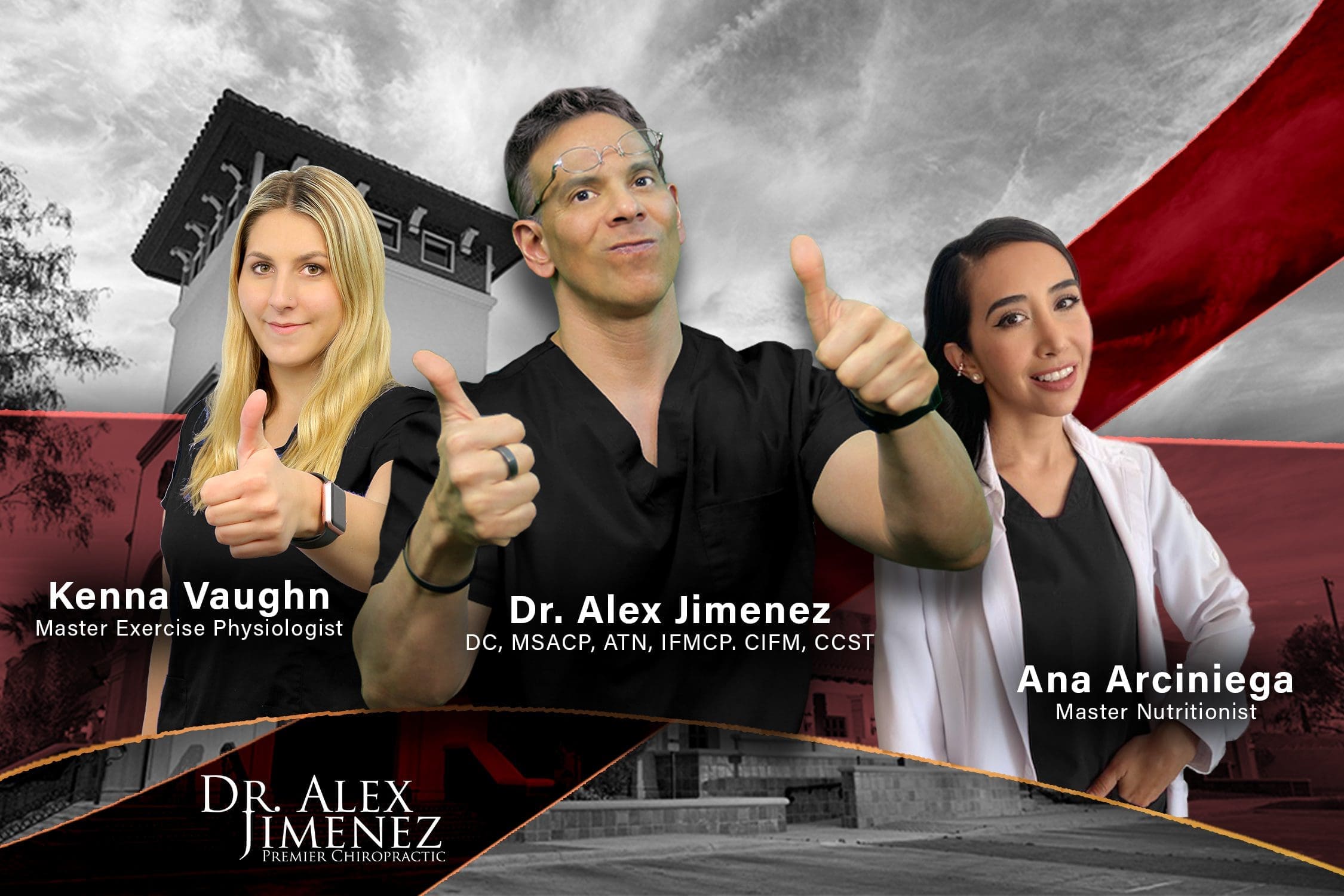
At Injury Medical Clinic PA in El Paso, Texas, Dr. Alexander Jimenez, DC, APRN, FNP-BC, CCST, CFMP, IFMCP, ATN, works within a multidisciplinary model involving chiropractic, advanced practice nursing, functional medicine, personal injury care, and rehabilitation.
Dr. Maria Guadalupe Cardenas, MD, a board-certified internal medicine physician with more than 40 years of experience, serves as Medical Director and Collaborative Physician. Current public provider records identify her NPI as 1164426749 and Texas medical license as J2933.
This type of structure allows different professional roles to complement one another.
Dr. Jimenez can focus heavily on biomechanics, spinal and extremity care, functional musculoskeletal assessment, rehabilitation, nutrition, and movement progression. When acting under his separately licensed APRN role, he must follow the laws and scope applicable to that license. Dr. Cardenas provides medical direction and internal medicine experience within the collaborative practice model.
Texas law must also be followed independently of the New Mexico document. The Texas Board of Nursing continues to describe physician delegation requirements involving APRN prescriptive authority, so the New Mexico FAQ should never be treated as the controlling rule for a Texas prescription (Texas Board of Nursing, 2026).
Dr. Jimenez’s Clinical Observations: Rehabilitation Comes First
In his educational materials, Dr. Jimenez describes peptides as possible biological adjuncts rather than “magic” treatments. His clinical approach emphasizes movement, nutrition, progressive rehabilitation, muscle preservation, sleep, metabolic health, and proper medical supervision (Jimenez, 2026a, 2026b).
This is an important distinction.
A patient recovering from a car accident, sports injury, chronic musculoskeletal problem, or metabolic condition may need several parts of care working together. That could include chiropractic treatment, exercise rehabilitation, functional medicine strategies, nutrition, body-composition monitoring, diagnostic testing, and appropriately prescribed medications.
Peptide therapy should never replace an accurate diagnosis or a good rehabilitation plan.
A Safer Path Forward
Legal peptide use requires more than choosing a popular compound.
A responsible integrative clinic asks several questions first: Is the exact medication FDA-approved? If compounded, is the compounding permitted under current federal and state law? Is there a real patient-specific medical need? Is the pharmacy properly licensed? Does the provider have the necessary prescriptive authority? Is there informed consent, appropriate laboratory testing, monitoring, and documentation?
FDA enforcement in 2026 has also focused on misleading promotion of compounded GLP-1 drugs, including advertising that makes compounded products appear equivalent to FDA-approved medications (FDA, 2026d).
The safest message is therefore simple: innovation and compliance should move together.
For patients considering peptide-based treatment, an integrated medical-chiropractic team can provide a broader strategy. Medical professionals evaluate whether a medication is appropriate and legal. Chiropractic and rehabilitation care address biomechanics, movement, strength, conditioning, and musculoskeletal health. Functional medicine can add nutrition, lifestyle, metabolic assessment, and individualized monitoring.
When these pieces are coordinated carefully, the goal is not simply to prescribe a peptide. The goal is to create a safe, legal, measurable, and patient-centered plan for better health and physical function.
References
Annunziata, C. (2025). Peptide therapy for chiropractors: Tissue repair and metabolic health. ProCredits. Peptide Therapy for Chiropractors: Tissue Repair and Metabolic Health
ByrdAdatto. (2026). How state laws impact peptide use in wellness practices. How State Laws Impact Peptide Use in Wellness Practices
Evolution Integrative Medicine. (2026). Why integrative medicine practitioners are turning to peptide therapy. Why Integrative Medicine Practitioners Are Turning to Peptide Therapy
Food and Drug Administration. (2026a). Compounding and the FDA: Questions and answers. Compounding and the FDA: Questions and Answers
Food and Drug Administration. (2026b). July 23-24, 2026: Meeting of the Pharmacy Compounding Advisory Committee. FDA Pharmacy Compounding Advisory Committee Meeting
Food and Drug Administration. (2026c). Certain bulk drug substances for use in compounding that may present significant safety risks. Certain Bulk Drug Substances That May Present Significant Safety Risks
Food and Drug Administration. (2026d). FDA warns 30 telehealth companies against illegal marketing of compounded GLP-1s. FDA Warns 30 Telehealth Companies Against Illegal Marketing of Compounded GLP-1s
Gruber Chiropractic & Integrative Medicine. (2026). Peptide therapy. Peptide Therapy
Holt, D. (2026). What peptides are legal in the U.S.? Understanding FDA approval, compounding, and the legal gray areas. Holt Law. What Peptides Are Legal in the U.S.?
Jimenez, A. (2026a). Peptide therapy, nutrition, and chiropractic care explained. Peptide Therapy, Nutrition, and Chiropractic Care Explained
Jimenez, A. (2026b). Integrative peptide science and chiropractic innovations. El Paso Back Clinic. Integrative Peptide Science and Chiropractic Innovations
LumaLex Law. (2026). Medical peptides attorney: Legal guidance for clinics, pharmacies, and telehealth companies. Medical Peptides Attorney
New Mexico Board of Nursing. (2026). Peptide therapies: Clinical practice—Frequently asked questions.
PeptideJournal. (2026). Are peptides legal? State-by-state guide. Are Peptides Legal? State-by-State Guide
Texas Board of Nursing. (2026). Advanced practice registered nurse practice FAQs. Texas Board of Nursing APRN Practice FAQs
Professional Scope of Practice *
The information herein on "Legal Peptide Use for Recovery and Injury Healing" is not intended to replace a one-on-one relationship with a qualified health care professional or licensed physician and is not medical advice. We encourage you to make healthcare decisions based on your research and partnership with a qualified healthcare professional.
Blog Information & Scope Discussions
Welcome to El Paso's Premier Wellness and Injury Care Clinic & Wellness Blog, where Dr. Alex Jimenez, DC, FNP-C, a Multi-State board-certified Family Practice Nurse Practitioner (FNP-BC) and Chiropractor (DC), presents insights on how our multidisciplinary team is dedicated to holistic healing and personalized care. Our practice aligns with evidence-based treatment protocols inspired by integrative medicine principles, similar to those found on this site and our family practice-based chiromed.com site, focusing on restoring health naturally for patients of all ages.
Our areas of multidisciplinary practice include Wellness & Nutrition, Chronic Pain, Personal Injury, Auto Accident Care, Work Injuries, Back Injury, Low Back Pain, Neck Pain, Migraine Headaches, Sports Injuries, Severe Sciatica, Scoliosis, Complex Herniated Discs, Fibromyalgia, Chronic Pain, Complex Injuries, Stress Management, Functional Medicine Treatments, and in-scope care protocols.
Our information scope is multidisciplinary, focusing on musculoskeletal and physical medicine, wellness, contributing etiological viscerosomatic disturbances within clinical presentations, associated somato-visceral reflex clinical dynamics, subluxation complexes, sensitive health issues, and functional medicine articles, topics, and discussions.
We provide and present clinical collaboration with specialists from various disciplines. Each specialist is governed by their professional scope of practice and their jurisdiction of licensure. We use functional health & wellness protocols to treat and support care for musculoskeletal injuries or disorders.
Our videos, posts, topics, and insights address clinical matters and issues that are directly or indirectly related to our clinical scope of practice.
Our office has made a reasonable effort to provide supportive citations and has identified relevant research studies that support our posts. We provide copies of supporting research studies upon request to regulatory boards and the public.
We understand that we cover matters that require an additional explanation of how they may assist in a particular care plan or treatment protocol; therefore, to discuss the subject matter above further, please feel free to ask Dr. Alex Jimenez, DC, APRN, FNP-BC, or contact us at 915-850-0900.
We are here to help you and your family.
Blessings
Dr. Alex Jimenez DC, MSACP, APRN, FNP-BC*, CCST, IFMCP, CFMP, ATN
email: [email protected]
Multidisciplinary Licensing & Board Certifications:
Licensed as a Doctor of Chiropractic (DC) in Texas & New Mexico*
Texas DC License #: TX5807, Verified: TX5807
New Mexico DC License #: NM-DC2182, Verified: NM-DC2182
Multi-State Advanced Practice Registered Nurse (APRN*) in Texas & Multi-States
Multi-state Compact APRN License by Endorsement (42 States)
Texas APRN License #: 1191402, Verified: 1191402 *
Florida APRN License #: 11043890, Verified: APRN11043890 *
Colorado License #: C-APN.0105610-C-NP, Verified: C-APN.0105610-C-NP
New York License #: N25929, Verified N25929
License Verification Link: Nursys License Verifier
* Prescriptive Authority Authorized
ANCC FNP-BC: Board Certified Nurse Practitioner*
Compact Status: Multi-State License: Authorized to Practice in 40 States*
Graduate with Honors: ICHS: MSN-FNP (Family Nurse Practitioner Program)
Degree Granted. Master's in Family Practice MSN Diploma (Cum Laude)
Dr. Alex Jimenez, DC, APRN, FNP-BC*, CFMP, IFMCP, ATN, CCST
(Board Certified: Family Practice Nurse Practitioner—Multistate)*
(Licensed Nurse Practitioner & Chiropractor - Multistate)*
Clinical Director
Digital Business Card
Dr. Maria Cardenas, MD
(Board Certified: Internal Medicine)
(Licensed Medical Doctor)
Medical Director, Clinical Director & Collaborative Physician
NPI # 1164426748
MD License #: J2933
Licenses and Board Certifications:
MD: Medical Doctor
DC: Doctor of Chiropractic
APRNP: Advanced Practice Registered Nurse
FNP-BC: Family Practice Specialization (Multi-State Board Certified)
RN: Registered Nurse (Multi-State Compact License)
CFMP: Certified Functional Medicine Provider
MSN-FNP: Master of Science in Family Practice Medicine
MSACP: Master of Science in Advanced Clinical Practice
IFMCP: Institute of Functional Medicine
CCST: Certified Chiropractic Spinal Trauma
ATN: Advanced Translational Neutrogenomics
Memberships & Associations:
TCA: Texas Chiropractic Association: Member ID: 104311
AANP: American Association of Nurse Practitioners: Member ID: 2198960
ANA: American Nurse Association: Member ID: 06458222 (District TX01)
TNA: Texas Nurse Association: Member ID: 06458222
NPI: 1205907805
| Primary Taxonomy | Selected Taxonomy | State | License Number |
|---|---|---|---|
| No | 111N00000X - Chiropractor | NM | DC2182 |
| Yes | 111N00000X - Chiropractor | TX | DC5807 |
| Yes | 363LF0000X - Nurse Practitioner - Family | TX | 1191402 |
| Yes | 363LF0000X - Nurse Practitioner - Family | FL | 11043890 |
| Yes | 363LF0000X - Nurse Practitioner - Family | CO | C-APN.0105610-C-NP |
| Yes | 363LF0000X - Nurse Practitioner - Family | NY | N25929 |
Dr. Alex Jimenez, DC, APRN, FNP-BC*, CFMP, IFMCP, ATN, CCST
(Board Certified: Family Practice Nurse Practitioner—Multistate)*
(Licensed Nurse Practitioner & Chiropractor - Multistate)*
Clinical Director
Digital Business Card
Dr. Maria Cardenas, MD
(Board Certified: Internal Medicine)*
(Licensed Medical Doctor)*
Medical Director, Clinical Director & Collaborative Physician
NPI # 1164426748
MD License #: J2933