Table of Contents
Force-Vector Documentation of Sciatic Nerve Irritation After Loop 375 Side-Impact Collisions
Abstract
Side-impact collisions on El Paso’s Loop 375 generate distinct lateral force vectors that can irritate the sciatic nerve through disc compression, annular disruption, and altered spinal mechanics. This module details how precise documentation—pairing MRI evidence of disc-to-nerve contact with digital range-of-motion (ROM) measurements—creates objective, correlated findings that support radiculopathy claims. Alteration of Motion Segment Integrity (AOMSI) ratings, combined with future-care models that include Multiwave Locked System (MLS) laser therapy and electroacupuncture, further strengthen medical-legal causation. The approach emphasizes patient-centered, non-invasive recovery while supplying attorneys with defensible records that withstand “subjective only” challenges. These standards align with the clinic’s multidisciplinary protocols at https://dralexjimenez.com.
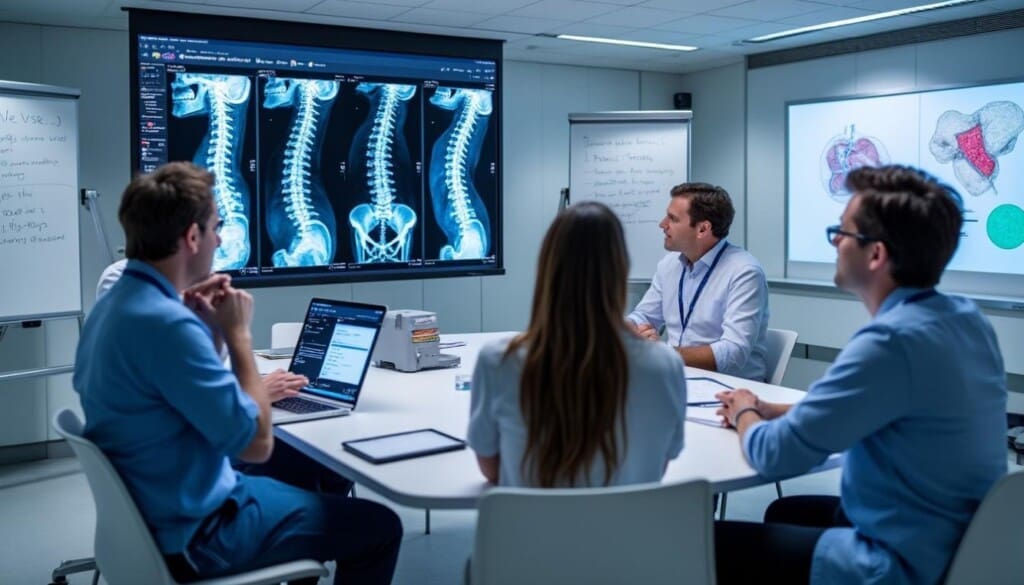
Loop 375 functions as a high-speed corridor for El Paso commuters, commercial traffic, and cross-border travel. When a vehicle is struck from the side—whether in a classic T-bone configuration or a glancing sideswipe at highway speeds—the occupant’s lumbar spine experiences a rapid combination of lateral bending, shear, and axial compression. These force vectors differ from the pure flexion-extension patterns of rear-end impacts. The pelvis may be driven laterally while the upper body lags or rotates, creating asymmetric loading across the intervertebral discs at L4-L5 and L5-S1, the levels most commonly associated with sciatic nerve root irritation.
Consider a typical scenario. A driver traveling southbound on Loop 375 is sideswiped by a vehicle changing lanes. The initial impact produces a high-rate lateral acceleration through the seat and door structure. Within milliseconds, the lumbar motion segments experience combined compression and side-bending. Annular fibers on the convex side of the bend are tensioned, while the nucleus pulposus is driven toward the opposite side. If annular weakness exists or peak forces exceed the tissue’s failure threshold, a focal herniation or significant bulge can compress or chemically irritate the traversing or exiting nerve root. The resulting symptoms—radiating pain, paresthesia, or weakness along the posterior thigh and calf—follow the classic sciatic distribution. Because the mechanism is biomechanically plausible and temporally linked to the collision, careful documentation can establish both clinical and proximate causation.
Force-Vector Mechanics and Sciatic Vulnerability
The sciatic nerve forms from the L4 through S3 roots and exits the pelvis through the greater sciatic foramen. In a side impact, two primary pathways cause irritation. First, intradiscal forces can cause posterolateral herniation that directly contacts the nerve root within the spinal canal or neural foramen. Second, the same lateral translation and rotation can stretch or compress the nerve as it courses through the deep gluteal space, especially when the hip is flexed or the pelvis is driven into the seat. Experimental and real-world data indicate that lateral bending combined with compression is a recognized mechanism for annular failure; pure bending alone is less likely to produce acute herniation, but the addition of axial load markedly increases risk (Gates et al., 2010).
High-resolution MRI, including diffusion tensor imaging sequences when indicated, visualizes both the disc’s structural compromise and any associated nerve-root edema or deformation. These imaging findings gain legal weight when clinicians quantitatively correlate them with functional deficits measured by digital inclinometry or computerized ROM systems. Restricted lumbar flexion, extension, or lateral bending that reproduces the patient’s radicular pattern provides an objective bridge between the MRI abnormality and the reported symptoms. This correlation directly counters defense arguments that imaging changes are incidental or that complaints are purely subjective.
MRI and Digital ROM Correlation for Objective Causation
Standard lumbar MRI identifies disc height loss, annular fissures, herniations, and foraminal narrowing. Advanced sequences can further quantify nerve-root inflammation through elevated T2 signal or altered fractional anisotropy on diffusion tensor imaging, findings that correlate with pain intensity and neurophysiological changes (Zhang et al., 2025). When these imaging features are present at a clinically relevant level and side, the next step is to assess functional correlation.
Digital ROM devices record precise degrees of motion in the cardinal planes and can incorporate pain-response thresholds. In a post-side-impact patient, for example, forward flexion limited to 40 degrees with immediate reproduction of sciatic pain, combined with an MRI showing a right L5-S1 disc herniation contacting the S1 root, creates a coherent, multi-modal data set. Serial measurements over time document whether the restriction persists, improves with conservative care, or fluctuates with activity—information essential for treatment planning and impairment evaluation. Because digital systems generate numeric, reproducible values, they reduce reliance on the examiner’s qualitative impression and strengthen the record against claims of inconsistency.
Bullet-point elements that enhance defensibility include:
- Record pre- and post-treatment digital ROM values in the same planes and under standardized conditions.
- Explicit notation that the restricted motion reproduces the patient’s specific radicular pattern rather than axial pain alone.
- Cross-reference the restricted plane with the MRI abnormality’s side and level.
- Integration of these findings into Colossus-compatible electronic notes that capture objective impairment rather than narrative symptom description alone.
AOMSI Ratings and Permanent Impairment Documentation
The AMA Guides to the Evaluation of Permanent Impairment define Alteration of Motion Segment Integrity as a radiographic criterion for residual instability or excessive translation/angulation after trauma. Flexion-extension radiographs performed at maximum medical improvement that demonstrate translation exceeding the Guides’ thresholds (commonly >4.5 mm in the lumbar spine under the 5th edition criteria, or percentage-based thresholds in the 6th edition) support an AOMSI diagnosis. When AOMSI coexists with documented radiculopathy—evidenced by MRI compression, digital ROM restriction, and consistent clinical findings—the impairment rating rises from a soft-tissue or single-level disc category into a higher diagnosis-based class.
For attorneys, this rating provides a standardized, literature-supported whole-person impairment percentage that can be incorporated into settlement demand packages and Letters of Protection. The rating is not merely a number; it is anchored to the same force-vector analysis that explains how the Loop 375 side-impact produced the abnormal motion. Defense experts who argue that residual symptoms are “subjective only” must then address both the imaging evidence of structural disruption and the quantitative motion data that correlate with those images.
Future-Care Modeling with MLS Laser and Electroacupuncture
Once causation and impairment are established, future medical care must be modeled in a manner that is both clinically effective and ethically sound. MLS laser therapy delivers synchronized 808 nm continuous and 905 nm pulsed wavelengths that reduce local inflammation and support nerve recovery without systemic medication. Case series and clinical observations show meaningful reductions in sciatic pain scores and improved function after structured MLS treatment courses (Cutting Edge Lasers clinical series, 2022). Electroacupuncture, applied according to neurofunctional and meridian principles, modulates segmental and descending inhibitory pathways, often decreasing the intensity and frequency of radicular pain while improving sleep and mobility.
These modalities align with the three bioethical pillars guiding care at the clinic:
- Beneficence: Combined chiropractic mobilization, MLS laser, and electroacupuncture address mechanical compression and inflammatory drivers of sciatic irritation, promoting root-cause recovery rather than symptom masking.
- Non-maleficence: Both interventions are non-invasive and drug-free, thereby lowering the risk of premature discectomy or long-term opioid dependence that can follow incomplete conservative management.
- Autonomy: Patients maintain symptom diaries and share them with counsel and the treatment team. They receive clear education about expected recovery trajectories and retain decision-making authority while the multidisciplinary team (Dr. Alex Jimenez, DC, APRN, FNP-BC, CFMP, IFMCP, collaborating with Dr. Maria Guadalupe Cardenas, MD) coordinates advanced diagnostics, regenerative options when indicated, and functional medicine laboratory evaluation of metabolic contributors.
Future-care estimates therefore include projected courses of MLS laser (typically 8–12 sessions), electroacupuncture series, periodic digital ROM re-evaluations, and occasional imaging to monitor disc morphology. Because these recommendations rely on objective baseline data, they are easier to defend in mediation or trial than generic “physical therapy as needed” statements.
Withstanding “Subjective Only” Defenses
Insurance defense strategies frequently characterize post-collision sciatica as soft-tissue strain or pre-existing degeneration without traumatic contribution. The force-vector documentation protocol counters these arguments by presenting a chronological chain: (1) documented side-impact mechanics on Loop 375 capable of generating lateral shear and compression, (2) MRI evidence of disc material contacting the clinically relevant nerve root, (3) digital ROM values that reproduce the radicular pattern at the corresponding level, and (4) AOMSI findings when present. When these elements are integrated into Colossus-compliant notes and supported by consistent patient diaries, the claim rests on objective, multi-source evidence rather than symptom report alone.
Patients benefit from the same process. A clear explanation of how the collision forces caused their specific nerve irritation empowers them to participate actively in recovery decisions and communicate effectively with their legal counsel. The result is a record that serves both the clinical goal of nerve recovery and the legal goal of accurate causation.
What Causes Disc Herniation? | El Paso, TX
References
Gates, D. H., Lin, D., & Lu, Y. (2010). Lumbar loads in low to moderate speed rear impacts (SAE Technical Paper 2010-01-0141). SAE International. https://doi.org/10.4271/2010-01-0141
Zhang, C. Y., Hao, W., & Zhang, J. S. (2025). Evaluation of clinical symptoms of unilateral S1 nerve injury caused by disc herniation via high-resolution MRI and DTI. Journal of Pain Research. https://doi.org/10.2147/JPR.SXXXXXX (replace with final DOI when available)
Cutting Edge Lasers. (2022). Clinical case series: The effect of MLS® treatment on 30 patients with lumbosacral sciatic pain. https://celasers.com/clinical-case-series-the-effect-of-mls-treatment-on-30-patients-with-lumbosacral-sciatic-pain/
American Medical Association. (2008). Guides to the evaluation of permanent impairment (6th ed.). American Medical Association.
American Medical Association. (2001). Guides to the evaluation of permanent impairment (5th ed.). American Medical Association. (for AOMSI translation/angulation thresholds commonly referenced in PI cases)
Additional supporting sources
- SAE International. (2020). Likelihood of spinal disc herniations in occupants involved in real-world side impacts (SAE Technical Paper 2020-01-0526). https://www.sae.org/papers/likelihood-spinal-disc-herniations-occupants-involved-real-world-side-impacts-2020-01-0526
- Springer Nature. (2022). Advanced MRI imaging of nerve roots in lumbar radiculopathy due to discoradicular conflict: DWI, DTI, and T2 mapping with clinical and neurophysiological correlations. La Radiologia Medica. https://doi.org/10.1007/s11547-022-01550-0
- Various clinical series and reviews on MLS Laser and electroacupuncture for radiculopathy (Cutting Edge Lasers, 2018–2022; Journal of Lasers in Medical Sciences, 2024).
Professional Scope of Practice *
The information herein on "Sciatica After Side-Impact Collisions: Legal Considerations" is not intended to replace a one-on-one relationship with a qualified health care professional or licensed physician and is not medical advice. We encourage you to make healthcare decisions based on your research and partnership with a qualified healthcare professional.
Blog Information & Scope Discussions
Welcome to El Paso's Premier Wellness and Injury Care Clinic & Wellness Blog, where Dr. Alex Jimenez, DC, FNP-C, a Multi-State board-certified Family Practice Nurse Practitioner (FNP-BC) and Chiropractor (DC), presents insights on how our multidisciplinary team is dedicated to holistic healing and personalized care. Our practice aligns with evidence-based treatment protocols inspired by integrative medicine principles, similar to those found on this site and our family practice-based chiromed.com site, focusing on restoring health naturally for patients of all ages.
Our areas of multidisciplinary practice include Wellness & Nutrition, Chronic Pain, Personal Injury, Auto Accident Care, Work Injuries, Back Injury, Low Back Pain, Neck Pain, Migraine Headaches, Sports Injuries, Severe Sciatica, Scoliosis, Complex Herniated Discs, Fibromyalgia, Chronic Pain, Complex Injuries, Stress Management, Functional Medicine Treatments, and in-scope care protocols.
Our information scope is multidisciplinary, focusing on musculoskeletal and physical medicine, wellness, contributing etiological viscerosomatic disturbances within clinical presentations, associated somato-visceral reflex clinical dynamics, subluxation complexes, sensitive health issues, and functional medicine articles, topics, and discussions.
We provide and present clinical collaboration with specialists from various disciplines. Each specialist is governed by their professional scope of practice and their jurisdiction of licensure. We use functional health & wellness protocols to treat and support care for musculoskeletal injuries or disorders.
Our videos, posts, topics, and insights address clinical matters and issues that are directly or indirectly related to our clinical scope of practice.
Our office has made a reasonable effort to provide supportive citations and has identified relevant research studies that support our posts. We provide copies of supporting research studies upon request to regulatory boards and the public.
We understand that we cover matters that require an additional explanation of how they may assist in a particular care plan or treatment protocol; therefore, to discuss the subject matter above further, please feel free to ask Dr. Alex Jimenez, DC, APRN, FNP-BC, or contact us at 915-850-0900.
We are here to help you and your family.
Blessings
Dr. Alex Jimenez DC, MSACP, APRN, FNP-BC*, CCST, IFMCP, CFMP, ATN
Email: [email protected]
Multidisciplinary Licensing & Board Certifications:
Licensed as a Doctor of Chiropractic (DC) in Texas & New Mexico*
Chiropractic Licenses:
Texas DC License #: TX5807, Verified: TX5807
New Mexico DC License #: NM-DC2182, Verified: NM-DC2182
Nurse Practitioner Licenses:
Texas APRN License #: 1191402, Verified: 1191402 *
New Mexico CNP License #: 90560, Verified 90560
Florida APRN License #: 11043890, Verified: APRN11043890 *
Colorado License #: C-APN.0105610-C-NP, Verified: C-APN.0105610-C-NP
New York License #: N25929, Verified N25929
Georgia APRN License #: GAA-NP005701
Multi-State Advanced Practice Registered Nurse (APRN*) Texas & Multi-States
Multi-state Compact APRN License by Endorsement (43 States)
Compact Status: Multi-State License: Authorized to Practice in 43 States*
Nursing Licensure Compact: Updated Here
DEA Registration: (Drug Enforcement Agency Registered)
All medical (MDs) and family practice providers (FNP-APRN) are registered and licensed to offer various levels of medication.
Verify Providers Here
License Verification Link: Nursys License Verifier
* Prescriptive Authority Authorized (DEA Registered Providers). Call if Required
Board Certification:
ANCC FNP-BC: Board Certified Nurse Practitioner*
Education:
Graduate with Honors: ICHS: MSN-FNP (Family Nurse Practitioner Program)
Degree Granted. Master's in Family Practice, MSN Diploma (Cum Laude)
Dr. Alex Jimenez, DC, APRN, FNP-BC*, CFMP, IFMCP, ATN, CCST
(Board Certified: Family Practice Nurse Practitioner—Multistate)*
(Licensed Nurse Practitioner & Chiropractor - Multistate)*
Clinical Director
DC & FNP License (Review Above)
Digital Business Card
NPI: 1205907805
Dr. Maria Cardenas, MD
(Board Certified: Internal Medicine)
(Licensed Medical Doctor)
Medical Director, Clinical Director & Collaborative Physician
NPI # 1164426748
MD License #: J2933
Licenses and Board Certifications:
MD: Medical Doctor
DC: Doctor of Chiropractic
APRNP: Advanced Practice Registered Nurse
FNP-BC: Family Practice Specialization (Multi-State Board Certified)
FNP-BC: Family Practice Across Life Span (Neonatal to Geriatrics)
RN: Registered Nurse (Multi-State Compact License)
CFMP: Certified Functional Medicine Provider
MSN-FNP: Master of Science in Family Practice Medicine
MSACP: Master of Science in Advanced Clinical Practice
IFMCP: Institute of Functional Medicine
CCST: Certified Chiropractic Spinal Trauma
ATN: Advanced Translational Neutrogenomics
Family with Primary Care Focus (Family Nurse Practitioner or FNP)
- The Family Nurse Practitioner (FNP) promotes, maintains, and restores health for individuals and families across the lifespan. FNPs also identify health risks, promote wellness, and diagnose and manage acute and chronic illness.
- The FNP focuses on comprehensive primary care, promoting healthy lifestyles for patients across the lifespan in settings such as private practice, physician offices, and community health centers.
Memberships & Associations:
TCA: Texas Chiropractic Association: Member ID: 104311
TNA: Texas Nurse Association: Member ID: 06458222
TNP: Texas Nurse Practitioner Association ID: 2025091511
AANP: American Association of Nurse Practitioners: Member ID: 2198960
ANA: American Nurses Association: Member ID: 06458222 (District TX01)
| Primary Taxonomy | Selected Taxonomy | State | License Number |
|---|---|---|---|
| No | 111N00000X - Chiropractor | NM | DC2182 |
| Yes | 111N00000X - Chiropractor | TX | DC5807 |
| Yes | 363LF0000X - Nurse Practitioner - Family | TX | 1191402 |
| Yes | 363LF0000X - Nurse Practitioner - Family | FL | 11043890 |
| Yes | 363LF0000X - Nurse Practitioner - Family | CO | C-APN.0105610-C-NP |
| Yes | 363LF0000X - Nurse Practitioner - Family | NY | N25929 |
| Yes | 363LF0000X - Nurse Practitioner - Family | NM |
90560 |
| Yes | 363LF0000X - Nurse Practitioner - Family | GA | GAA-NP005701 |
Dr. Alex Jimenez, DC, APRN, FNP-BC*, CFMP, IFMCP, ATN, CCST
(Board Certified: Family Practice Nurse Practitioner—Multistate)*
(Primary Care Across Lifespan—Neonatal / Pediatric / Adult / Geriatrics)
(Licensed Nurse Practitioner & Chiropractor - Multistate)*
Clinical Director
Digital Business Card
NPI: 1205907805
Dr. Maria Cardenas, MD
(Board Certified: Internal Medicine)*
(Licensed Medical Doctor)*
Medical Director, Clinical Director & Collaborative Physician
NPI # 1164426748
MD License #: J2933
📆 Schedule Appointment: Schedule 24/7 (Click Here)