Table of Contents
Home Recovery Made Easier: Self-Massage Tools for Chiropractic Patients
Self-massage tools can be powerful partners to integrative chiropractic care when they’re used safely and with guidance. Chiropractors often suggest simple devices—such as foam rollers, massage balls, massage guns, and trigger-point tools—to help patients keep muscles relaxed, support spinal adjustments, and speed recovery between visits (AnteriorAssist, 2024; High Amplitude Health Chiropractic, 2025). Redison Tech LLC+1
This article explains how these tools work, how they fit into Dr. Alexander Jimenez’s integrative approach, and how to use them wisely. Hence, they enhance your chiropractic care rather than replace it.
Important: This is general education, not personal medical advice. Always check with your chiropractor or healthcare provider before starting any new self-massage routine—especially if you have recent injuries, nerve symptoms, or medical conditions.
1. How Self-Massage Supports Integrative Chiropractic Care
Integrative chiropractic care combines spinal and joint adjustments with soft-tissue work, rehab exercise, functional medicine, and—in Dr. Jimenez’s clinic—nurse practitioner medical insight and telemedicine support (Jimenez, n.d.). El Paso, TX Doctor Of Chiropractic
In this model, self-massage tools are used to:
-
Relax tight muscles that keep pulling joints out of alignment
-
Improve circulation so nutrients and oxygen can reach healing tissues
-
Support myofascial release, easing the connective tissue around muscles
-
Extend the benefits of adjustments between appointments
-
Give patients more control over their recovery at home (Outside Online, 2025; RAD Roller, n.d.). Outside Online+1
In Dr. Jimenez’s practice, patients recovering from personal injuries, sports injuries, or chronic pain are often taught self-massage strategies as part of a larger plan that may also include spinal adjustments, corrective exercise, anti-inflammatory nutrition, and medical oversight when needed (Jimenez, n.d.). El Paso, TX Doctor Of Chiropractic
2. How Self-Massage Works: Myofascial Release and Circulation
Most self-massage tools work by creating pressure and movement over muscles and fascia. This is often called self-myofascial release (SMR).
Research and clinical experience show that SMR can:
-
Increase joint range of motion without harming performance
-
Help reduce delayed-onset muscle soreness (DOMS) after exercise
-
Decrease perceived muscle tightness and tenderness (Douglass, 2025). BarBend
Manual therapy and myofascial techniques, when used correctly, can reduce pain and improve mobility in conditions such as low back pain and other musculoskeletal issues (Topaloğlu et al., 2025; Spine-health, 2022). PMC+1
Why chiropractors like SMR tools:
-
They help warm up muscles before adjustments
-
They make it easier for joints to move correctly
-
They can stabilize progress between visits when combined with exercise and ergonomic changes
A key point: too much pressure or poor technique can irritate tissues instead of helping them. Many clinics, including Dr. Jimenez’s, teach patients proper self-massage positions and limits so they don’t overdo it (Jimenez, n.d.; High Amplitude Health Chiropractic, 2025).El Paso, TX Doctor Of Chiropractic+1
3. Foam Rollers: The Foundation Self-Massager
Foam rollers are long cylinders of dense foam used under the body to create pressure while you roll slowly over tight areas.
Main benefits
Foam rollers can:
-
Help release tight muscles in the hips, thighs, glutes, and upper back
-
Improve blood flow and tissue hydration
-
Support better posture and spinal mechanics when combined with adjustments and exercise
-
Reduce muscle soreness and improve flexibility over time (Douglass, 2025; AnteriorAssist, 2024). BarBend+1
High Amplitude Health Chiropractic notes that a foam roller is often the go-to self-massage tool for low-back–related problems. Still, the work is mostly done on the hips, glutes, hamstrings, quadriceps, IT band, and adductors, rather than directly on the lumbar spine (High Amplitude Health Chiropractic, 2025). High Amplitude Health Chiropractic
How chiropractors commonly suggest foam rolling (general principles)
-
Focus on muscles around the spine instead of pressing hard on the bones
-
Use slow, controlled rolling—not fast bouncing
-
When it feels like “good pressure,” you’re usually in a safe range; sharp or burning pain is a stop signal
Examples of areas often targeted:
-
For low-back–related pain:
-
Glutes
-
Hamstrings
-
Quadriceps
-
IT band
-
Hip flexors
-
-
For upper back and posture:
-
Thoracic spine (mid-back)
-
Lats
-
Pec stretch (lying lengthwise on the roller)
-
In Dr. Jimenez’s integrative care plans, foam rollers are often used by:
-
Patients recovering from motor vehicle accidents
-
Athletes working on posture and movement patterns
-
Office workers with sitting-related stiffness
He frequently pairs foam rolling with corrective exercises, breathing training, and ergonomic coaching so that muscles and joints can relearn healthier patterns, not just for temporary relief (Jimenez, n.d.). El Paso, TX Doctor Of Chiropractic
4. Massage Balls and Lacrosse Balls: Small Tools, Big Effects
Massage balls (rubber, inflatable, or textured) and lacrosse balls are excellent for targeted trigger points—tight “knots” you can feel with your fingers.
What the evidence and clinicians say
-
A chiropractor-written guide recommends a massage ball (4–5 inches, firm but slightly flexible) as the best self-massage tool for upper back and neck tension (High Amplitude Health Chiropractic, 2025). High Amplitude Health Chiropractic
-
Outside Online notes that a simple lacrosse ball can work deeply into areas like the glutes, trapezius, chest, hamstrings, and feet, almost like dry needling or deep tissue massage when used consistently (Jhung, 2025). Outside Online
-
RAD Roller’s tools are designed to fit alongside the spine or under specific muscles to encourage safe, precise self-myofascial release (RAD Roller, n.d.). RAD Roller
Good uses for massage balls
-
Between the shoulder blades and upper back (against a wall)
-
Along the side of the hip and glutes
-
Under the foot for plantar fascia tightness
-
Around the shoulder and chest to open posture
Simple ball routine (example):
-
30–60 seconds on each tender spot
-
Slow breathing while you hold or roll gently
-
Stop if you feel sharp, zapping, or radiating pain
In Dr. Jimenez’s experience, ball work is especially beneficial for:
-
Desk workers with tight chests and upper backs
-
Athletes with glute and hip trigger points that keep pulling the pelvis out of balance
-
Post-injury patients who need gentle, precise work once acute inflammation has calmed
5. Massage Sticks and Canes: Easy Control, Great Reach
Massage sticks
Massage sticks are handheld rollers you press along muscles with your arms.
High Amplitude Health Chiropractic recommends a massage stick as the best self-massage tool for the calves and lower leg because it allows strong compression without requiring lying on the floor (High Amplitude Health Chiropractic, 2025). High Amplitude Health Chiropractic
Great for:
-
Calves (for runners and people who stand all day)
-
Shins
-
Quads
-
Outer thigh / IT band
Cane-style trigger-point tools
Tools like the Body Back Buddy or similar trigger-point canes allow you to hook around your shoulder and press directly into upper back and neck knots (Fields, 2025; Jhung, 2025). The Spruce+1
Typical benefits:
-
Reach tight spots in the mid-back without help
-
Apply pressure with leverage instead of finger strength
-
Work on the base of the skull and upper neck for tension headaches (with gentle pressure)
Dr. Jimenez often sees that these tools work well for:
-
People who can’t easily lie on the floor to foam roll
-
Patients with hand or wrist pain who struggle to use classic massage balls
-
Telemedicine patients who need simple tools that travel easily
6. Percussion Massage Guns: When Vibration Helps
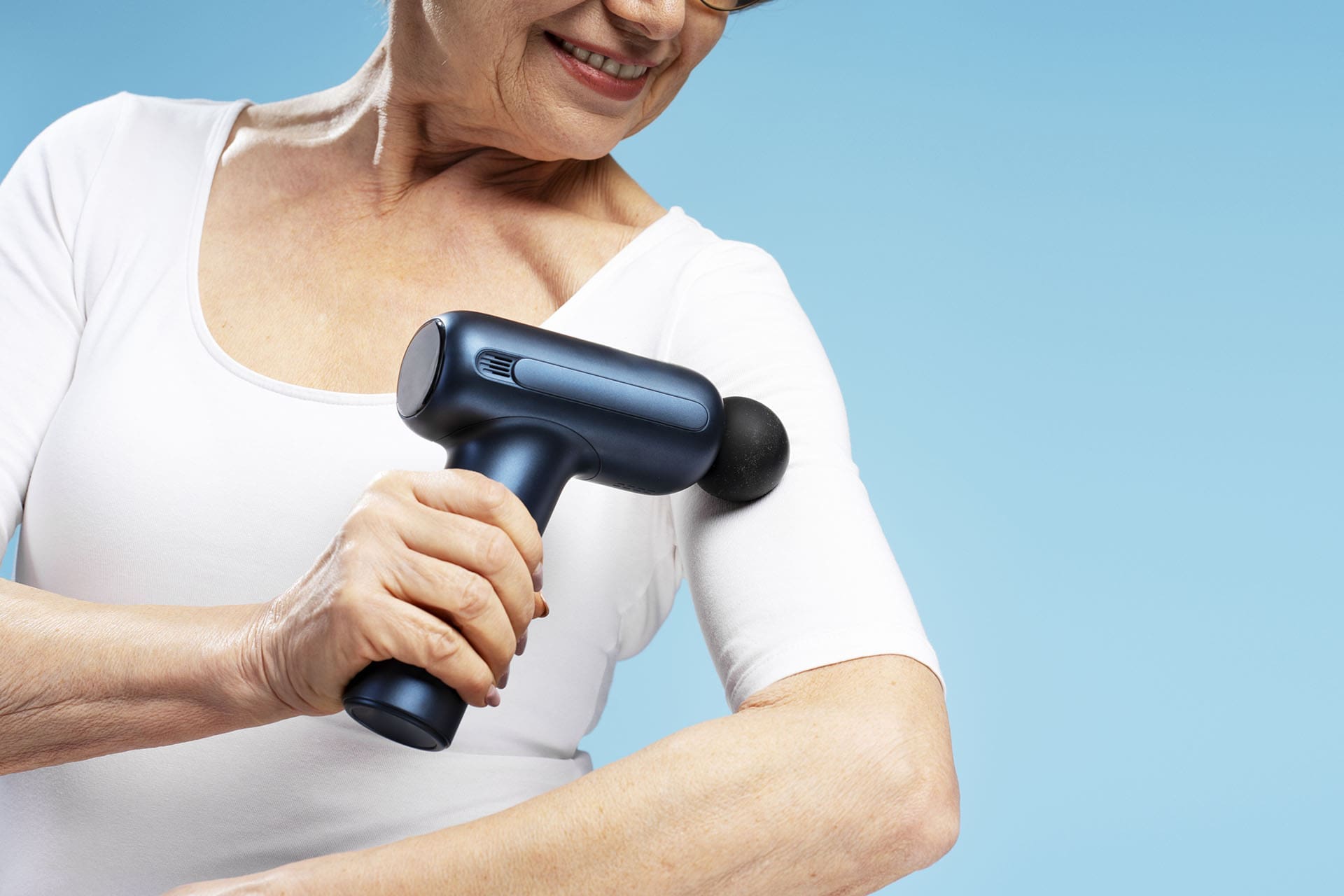
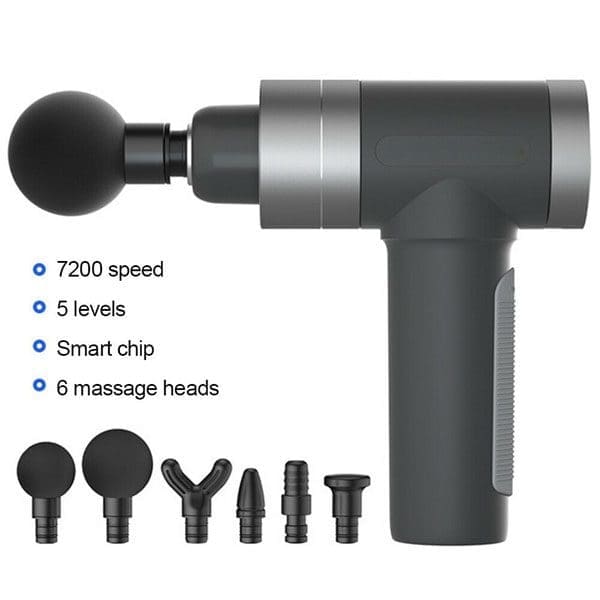
Massage guns deliver rapid, low-pressure pulses into muscle tissue. They’ve become extremely popular with athletes, weekend warriors, and physical therapy patients.
What research and reviewers suggest
-
BarBend’s comparison of massage guns vs. foam rollers notes that both tools can help with tension, range of motion, and soreness, but they work differently:
-
Foam rollers provide sustained pressure using your body weight
-
Massage guns use percussive vibration over a smaller area (Douglass, 2025). BarBend
-
-
Another BarBend review reports that massage guns may improve blood flow, flexibility, and perceived pain, especially when paired with stretching and strengthening (Asti as cited in BarBend, 2024).BarBend
-
Consumer tests from The Spruce highlight that quality massage guns with multiple intensity settings and attachments allow people to customize treatment to their comfort level (Fields, 2025).The Spruce
How chiropractors often recommend using massage guns
Common general tips you’ll hear in clinics and from rehab pros:
-
Start on a low setting and move slowly
-
Aim for 10–15 minutes total on a region, not continuous all day (Fields, 2025) The Spruce
-
Avoid using them directly over:
-
The spine or bony areas
-
Fresh bruises
-
Open wounds
-
Suspected fractures or acute injuries
-
Many chiropractors (including Dr. Jimenez) consider massage guns beneficial when:
-
Used after adjustments and stretching to encourage circulation
-
Focused on large muscle groups like the quads, glutes, and hamstrings
-
Paired with core and posture training so the nervous system learns more efficient movement patterns (Jimenez, n.d.; Douglass, 2025). El Paso, TX Doctor Of Chiropractic+1
7. Other Helpful Self-Massage Tools
Beyond the big four (foam rollers, balls, sticks, and guns), there are many other self-care options:
-
Textured or vibrating foam rollers – add stimulation that can feel more like a deep-tissue massage (IDEA Health & Fitness Association, 2022). IDEA Health & Fitness Association
-
Myofascial scraping or IASTM tools – rigid tools used with lotion to glide over fascia; best taught by a professional first (Outside Online, 2025). Outside Online
-
Back massager cushions and handheld percussive devices – useful for people who prefer set-it-and-forget-it devices rather than floor work (Fields, 2025). The Spruce
Professional suppliers, like ScripHessco, carry a wide range of balls, rollers, massage sticks, and handheld tools commonly used in chiropractic and massage settings, underscoring their central role in musculoskeletal care (ScripHessco, n.d.). scriphessco.com
8. How Chiropractors Integrate Self-Massage Tools into Care
Chiropractors don’t just hand a foam roller to patients and walk away. In modern integrative practices, self-massage tools are usually included as part of a structured plan:
Typical clinic flow:
-
Assessment
-
Posture, joint motion, muscle strength, and neurologic tests
-
Imaging or specialist referral if red flags are present
-
-
In-office treatment
-
Manual or instrument-assisted adjustments (e.g., Activator®, ArthroStim®, Impulse Adjusting Instrument) for precise spinal corrections (ChiroTouch, 2025; Current Chiropractic, n.d.). ChiroTouch+1
-
Soft tissue work and rehab exercises
-
-
Home program
-
Specific foam roller zones to target
-
Massage ball or lacrosse ball points to work on
-
Stick or gun usage with clear time and intensity limits
-
AnteriorAssist’s overview of chiropractic tools notes that foam rollers, massage balls, and handheld massagers are commonly recommended to help maintain spinal alignment and muscle balance outside the clinic (AnteriorAssist, 2024). Redison Tech LLC
In Dr. Jimenez’s integrative model, these home tools are often taught:
-
In person so that patients can feel the correct pressure and body positions
-
Via telemedicine video visits, where he or his team can watch a patient foam roll or use a massage gun and correct technique in real time (Jimenez, n.d.). El Paso, TX Doctor Of Chiropractic
9. Safety Tips: When to Stop and Call Your Chiropractor
Self-massage tools are helpful, but they’re not risk-free. Spine and myofascial experts warn that aggressive or poorly guided self-treatment can sometimes worsen pain or irritate nerves (Spine-health, 2022; Hospital for Special Surgery, 2021). Spine-health+1
General safety checklist
Stop and contact your chiropractor or medical provider if you notice:
-
Sharp, electric, or radiating pain
-
Numbness, tingling, or weakness
-
Swelling, bruising, or warmth that quickly worsens
-
New headache, dizziness, or vision changes with neck work
-
New loss of bladder or bowel control (emergency—go to ER)
Common “don’ts”:
-
Don’t roll or gun directly over the spine or joints
-
Don’t use heavy pressure on acute injuries or fresh bruises
-
Don’t keep rolling through intense pain thinking “more is better”
-
Don’t replace professional evaluation with gadgets if pain is new, severe, or unexplained
Dr. Jimenez often reminds patients that self-massage tools are partners, not replacements, for proper diagnosis and care—especially in personal injury, neurological issues, or complex chronic pain cases (Jimenez, n.d.). El Paso, TX Doctor Of Chiropractic
10. Building a Simple Daily Self-Massage Routine
Here’s a sample structure many patients find helpful once cleared by their chiropractor:
Before your day (5–10 minutes)
-
1–2 minutes: gentle thoracic foam rolling
-
1–2 minutes: hip or glute rolling
-
1–2 minutes: calf or foot work with a ball or stick
After work or training (10–15 minutes)
-
3–5 minutes: foam roll quads, hamstrings, IT band
-
3–5 minutes: ball work on upper back and glutes
-
3–5 minutes: massage gun or stick on any stubborn areas (if approved)
Weekly check-ins
-
Note which muscles always feel tight
-
Track how you feel after chiropractic adjustments when you stay consistent with the tools
-
Review technique with your chiropractor or via telehealth if pain patterns change
In an integrative setting like Dr. Jimenez’s clinic, this daily routine is often combined with:
-
Targeted strength and stability training
-
Anti-inflammatory nutrition and hydration strategies
-
Sleep and stress-management plans to help the body recover fully
Conclusion
Self-massagers—foam rollers, massage balls, massage sticks, percussion guns, and trigger-point tools—can strongly complement integrative chiropractic care when used thoughtfully and safely. They help keep muscles relaxed, improve circulation, and maintain the progress you make in the clinic.
The key is guidance and balance:
-
Choose tools that match your body and needs
-
Use them in short, focused sessions
-
Pair them with adjustments, exercise, and healthy habits
-
Always ask your chiropractor or medical provider before starting or changing your routine
With the right plan, these tools put more of your recovery back in your own hands—while staying anchored to expert, integrative care from providers like Dr. Alexander Jimenez, DC, APRN, FNP-BC.
References
AnteriorAssist. (2024, September 28). 10 essential chiropractor tools for a healthy back: Your guide to spinal wellness. Redison Tech LLC
ChiroTouch. (2025). The 18 most popular chiropractic tools and equipment. ChiroTouch
Current Chiropractic. (n.d.). Why our chiropractors use the Activator. Current Chiropractic
Douglass, I. (2025, March 18). Massage gun vs. foam roller — Which is better for strength athletes?. BarBend.BarBend
Fields, J. (2025, October 17). After testing a dozen back massagers, here are the best we recommend. The Spruce.The Spruce
High Amplitude Health Chiropractic. (2025). All the best tools to use for self-massage. High Amplitude Health Chiropractic
Hospital for Special Surgery. (2021). Myofascial release therapy. Mayo Clinic
IDEA Health & Fitness Association. (2022). Self-care massage tools for recovery. IDEA Health & Fitness Association
Jhung, L. (2025, September 20). My body is high maintenance. I rely on these five self-massage tools to keep it healthy. Outside Online.Outside Online
Jimenez, A. (n.d.). Dr. Alex Jimenez – Chiropractic and functional medicine insights. El Paso, TX Doctor Of Chiropractic
RAD Roller. (n.d.). Self-care massage tools everybody should own. RAD Roller
ScripHessco. (n.d.). Massage tools. scriphessco.com
Spine-health. (2022). Myofascial release (myofascial therapy). Spine-health
Topaloğlu, S., et al. (2025). [Effectiveness of myofascial release in chronic low back pain: Systematic review] (summary referenced in recovery-tool overviews).PMC
Professional Scope of Practice *
The information herein on "Self-Massage Tools for Chiropractic Patients Benefits" is not intended to replace a one-on-one relationship with a qualified health care professional or licensed physician and is not medical advice. We encourage you to make healthcare decisions based on your research and partnership with a qualified healthcare professional.
Blog Information & Scope Discussions
Welcome to El Paso's Premier Wellness and Injury Care Clinic & Wellness Blog, where Dr. Alex Jimenez, DC, FNP-C, a Multi-State board-certified Family Practice Nurse Practitioner (FNP-BC) and Chiropractor (DC), presents insights on how our multidisciplinary team is dedicated to holistic healing and personalized care. Our practice aligns with evidence-based treatment protocols inspired by integrative medicine principles, similar to those found on this site and our family practice-based chiromed.com site, focusing on restoring health naturally for patients of all ages.
Our areas of multidisciplinary practice include Wellness & Nutrition, Chronic Pain, Personal Injury, Auto Accident Care, Work Injuries, Back Injury, Low Back Pain, Neck Pain, Migraine Headaches, Sports Injuries, Severe Sciatica, Scoliosis, Complex Herniated Discs, Fibromyalgia, Chronic Pain, Complex Injuries, Stress Management, Functional Medicine Treatments, and in-scope care protocols.
Our information scope is multidisciplinary, focusing on musculoskeletal and physical medicine, wellness, contributing etiological viscerosomatic disturbances within clinical presentations, associated somato-visceral reflex clinical dynamics, subluxation complexes, sensitive health issues, and functional medicine articles, topics, and discussions.
We provide and present clinical collaboration with specialists from various disciplines. Each specialist is governed by their professional scope of practice and their jurisdiction of licensure. We use functional health & wellness protocols to treat and support care for musculoskeletal injuries or disorders.
Our videos, posts, topics, and insights address clinical matters and issues that are directly or indirectly related to our clinical scope of practice.
Our office has made a reasonable effort to provide supportive citations and has identified relevant research studies that support our posts. We provide copies of supporting research studies upon request to regulatory boards and the public.
We understand that we cover matters that require an additional explanation of how they may assist in a particular care plan or treatment protocol; therefore, to discuss the subject matter above further, please feel free to ask Dr. Alex Jimenez, DC, APRN, FNP-BC, or contact us at 915-850-0900.
We are here to help you and your family.
Blessings
Dr. Alex Jimenez DC, MSACP, APRN, FNP-BC*, CCST, IFMCP, CFMP, ATN
email: [email protected]
Multidisciplinary Licensing & Board Certifications:
Licensed as a Doctor of Chiropractic (DC) in Texas & New Mexico*
Texas DC License #: TX5807, Verified: TX5807
New Mexico DC License #: NM-DC2182, Verified: NM-DC2182
Multi-State Advanced Practice Registered Nurse (APRN*) in Texas & Multi-States
Multi-state Compact APRN License by Endorsement (42 States)
Texas APRN License #: 1191402, Verified: 1191402 *
Florida APRN License #: 11043890, Verified: APRN11043890 *
Colorado License #: C-APN.0105610-C-NP, Verified: C-APN.0105610-C-NP
New York License #: N25929, Verified N25929
License Verification Link: Nursys License Verifier
* Prescriptive Authority Authorized
ANCC FNP-BC: Board Certified Nurse Practitioner*
Compact Status: Multi-State License: Authorized to Practice in 40 States*
Graduate with Honors: ICHS: MSN-FNP (Family Nurse Practitioner Program)
Degree Granted. Master's in Family Practice MSN Diploma (Cum Laude)
Dr. Alex Jimenez, DC, APRN, FNP-BC*, CFMP, IFMCP, ATN, CCST
My Digital Business Card
Licenses and Board Certifications:
DC: Doctor of Chiropractic
APRNP: Advanced Practice Registered Nurse
FNP-BC: Family Practice Specialization (Multi-State Board Certified)
RN: Registered Nurse (Multi-State Compact License)
CFMP: Certified Functional Medicine Provider
MSN-FNP: Master of Science in Family Practice Medicine
MSACP: Master of Science in Advanced Clinical Practice
IFMCP: Institute of Functional Medicine
CCST: Certified Chiropractic Spinal Trauma
ATN: Advanced Translational Neutrogenomics
Memberships & Associations:
TCA: Texas Chiropractic Association: Member ID: 104311
AANP: American Association of Nurse Practitioners: Member ID: 2198960
ANA: American Nurse Association: Member ID: 06458222 (District TX01)
TNA: Texas Nurse Association: Member ID: 06458222
NPI: 1205907805
| Primary Taxonomy | Selected Taxonomy | State | License Number |
|---|---|---|---|
| No | 111N00000X - Chiropractor | NM | DC2182 |
| Yes | 111N00000X - Chiropractor | TX | DC5807 |
| Yes | 363LF0000X - Nurse Practitioner - Family | TX | 1191402 |
| Yes | 363LF0000X - Nurse Practitioner - Family | FL | 11043890 |
| Yes | 363LF0000X - Nurse Practitioner - Family | CO | C-APN.0105610-C-NP |
| Yes | 363LF0000X - Nurse Practitioner - Family | NY | N25929 |
Dr. Alex Jimenez, DC, APRN, FNP-BC*, CFMP, IFMCP, ATN, CCST
My Digital Business Card