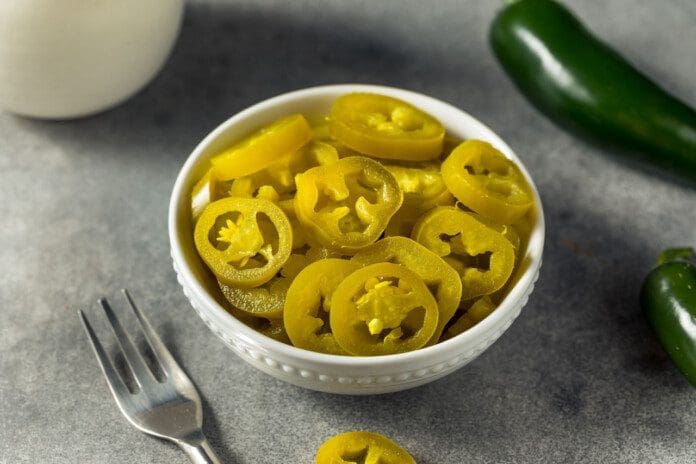
“For individuals looking to spice up their diet, can jalapeño peppers provide nutrition and be a good source of vitamins?”
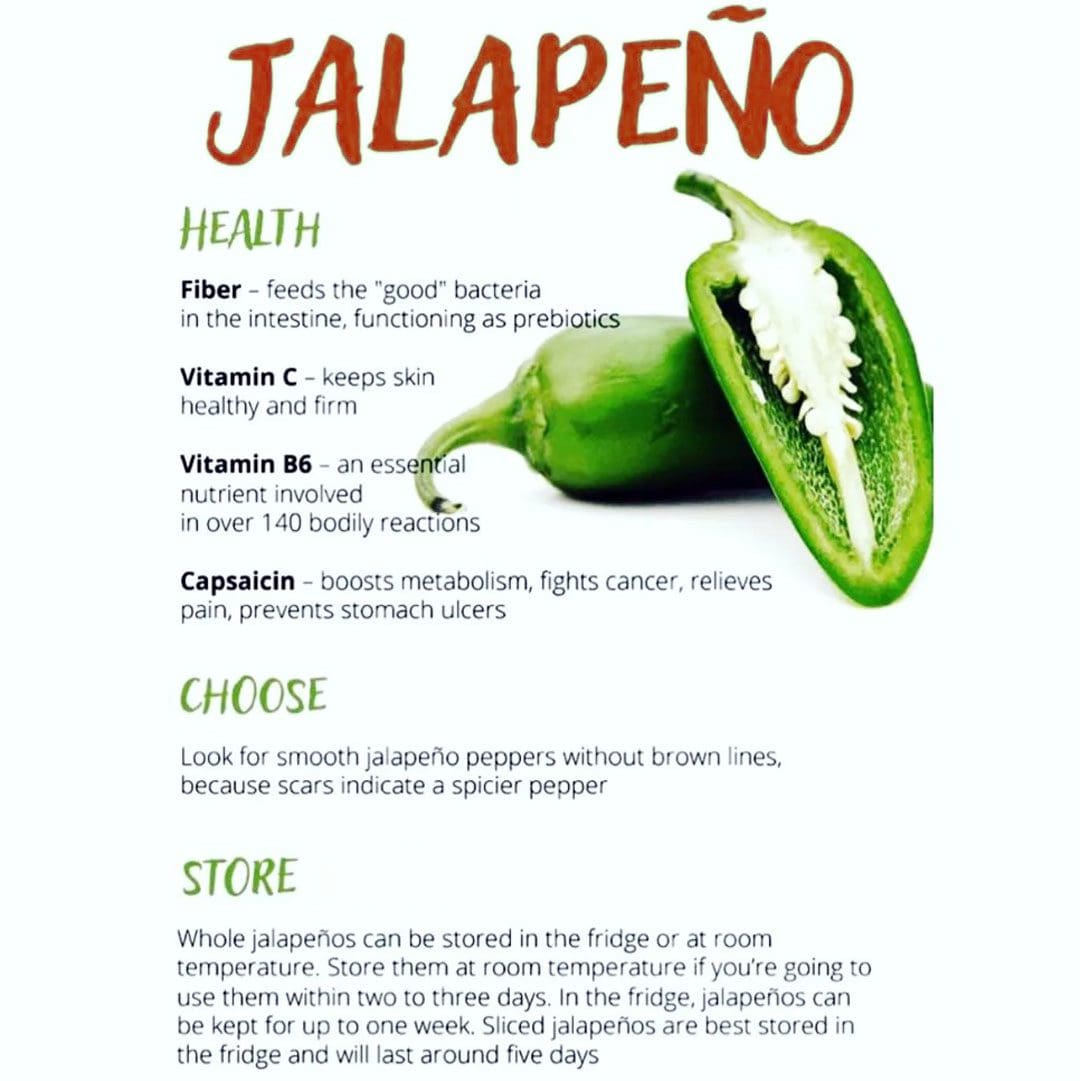
Table of Contents
Jalapeño Pepper Nutrition
Jalapeños are one of many types of chili peppers that are used to accent or garnish and add heat to a dish. This pepper variety is generally harvested and sold when it is a glossy dark green but turns red as it matures. The following nutrition information for one 14-gram jalapeño pepper. (FoodData Central. U.S. Department of Agriculture. 2018)
Calories – 4
Fat – 0.05-grams
Sodium – 0.4 – milligrams
Carbohydrates – 0.5-grams
Fiber – 0.4 – grams
Sugars – 0.6 – grams
Protein – 0.1 – grams
Carbohydrates
- Jalapeño peppers contain very little carbohydrates and cannot be tested with the standard GI methodology. (Fiona S. Atkinson et al., 2008)
- 6 grams of carbohydrates in 1-cup serving has an extremely low glycemic load, meaning the peppers do not raise blood sugar levels rapidly or provoke an insulin response. (Mary-Jon Ludy et al., 2012)
Fat
- Jalapeños have a trace amount of fat that is mostly unsaturated.
Protein
- The peppers are not a recommended source of protein, as they contain less than a gram of protein in a full cup of sliced jalapeños.
Vitamins and Minerals
- One pepper contains about 16 milligrams of vitamin C, about 18% of the recommended daily allowance/RDA.
- This vitamin is important for many essential functions, including wound healing and immune function, and must be acquired through diet. (National Institutes of Health Office of Dietary Supplements. 2021)
- Jalapeños are a good source of vitamin A, which supports skin and eye health.
- In 1/4 cup sliced jalapeño peppers, individuals acquire around 8% of the recommended daily amount of vitamin A for men and 12% for women.
- Jalapeños are also a source of vitamins B6, K, and E.
Health Benefits
Many health benefits have been attributed to capsaicin which is the substance that generates the heat in the peppers, including alleviating pain and itching by blocking a neuropeptide that transmits those signals to the brain. (Andrew Chang et al., 2023)
Pain Relief
- Research shows capsaicin – supplements or topical ointments/creams – can relieve nerve and joint pain. (Andrew Chang et al., 2023)
Lower the Risk of Heart Disease
- A study of individuals with low levels of healthy HDL cholesterol, who are at risk of coronary heart disease/CHD, showed that capsaicin supplements improved risk factors for CHD. (Yu Qin et al., 2017)
Reduce Inflammation
- The vitamin C in the peppers acts as an antioxidant, which means it can repair cells damaged by oxidative stress and reduce inflammation.
- Inflammation and stress can contribute to chronic diseases like obesity, diabetes, and some cancers. (National Institutes of Health Office of Dietary Supplements. 2021)
Allergies
- Hot peppers are related to sweet or bell peppers and are members of the nightshade family.
- Allergies to these foods are possible but rare. (American Academy of Allergy Asthma and Immunology. 2017)
- Sometimes individuals with pollen allergies can cross-react to raw fruits and vegetables, including different types of peppers.
- The capsaicin in jalapeño and other hot peppers can irritate the skin and the eyes, even in individuals with no allergies.
- It is recommended to wear gloves when handling hot peppers and avoid touching your face.
- Wash hands, utensils, and work surfaces thoroughly when finished.
Adverse Effects
- When fresh, jalapeño peppers can have varying heat levels.
- They range from 2,500 to 10,000 Scoville units.
Varieties
- Jalapeños are one variety of hot peppers.
- They can be consumed raw, pickled, canned, or smoked/chipotle peppers and are hotter than fresh or canned because they are dried and treated.
Storage and Safety
- Fresh jalapeños can be stored at room temperature for a few days or in the refrigerator for about a week.
- Once a jar is opened, keep it in the refrigerator.
- For an open can of peppers, transfer to a glass or plastic container for refrigerator storage.
- Peppers can be frozen after preparing by cutting off the stems and scooping out the seeds.
- Frozen jalapeños are best within 6 months for the best quality, but can be kept for much longer.
Preparation
- Removing the seeds can help reduce the heat.
- Jalapeños can be eaten whole or sliced and added to salads, marinades, salsa, or cheeses.
- Some add jalapeños to smoothies for a spicy kick.
- They can be used in various recipes for added heat and tanginess.
Chiropractic, Fitness, and Nutrition
References
FoodData Central. U.S. Department of Agriculture. (2018). Peppers, jalapeno, raw.
Atkinson, F. S., Foster-Powell, K., & Brand-Miller, J. C. (2008). International tables of glycemic index and glycemic load values: 2008. Diabetes care, 31(12), 2281–2283. https://doi.org/10.2337/dc08-1239
Ludy, M. J., Moore, G. E., & Mattes, R. D. (2012). The effects of capsaicin and capsiate on energy balance: critical review and meta-analyses of studies in humans. Chemical senses, 37(2), 103–121. https://doi.org/10.1093/chemse/bjr100
National Institutes of Health Office of Dietary Supplements. (2021). Vitamin C: Fact Sheet for Health Professionals.
Chang A, Rosani A, Quick J. Capsaicin. [Updated 2023 May 23]. In: StatPearls [Internet]. Treasure Island (FL): StatPearls Publishing; 2023 Jan-. Available from: https://www.ncbi.nlm.nih.gov/books/NBK459168/
Qin, Y., Ran, L., Wang, J., Yu, L., Lang, H. D., Wang, X. L., Mi, M. T., & Zhu, J. D. (2017). Capsaicin Supplementation Improved Risk Factors of Coronary Heart Disease in Individuals with Low HDL-C Levels. Nutrients, 9(9), 1037. https://doi.org/10.3390/nu9091037
American Academy of Allergy Asthma and Immunology. (2017). Ask the Expert: Pepper Allergy.