Table of Contents
How PRP Supports Tissue “Cleanup,” Repair, and Recovery in Integrative Care
Platelet-Rich Plasma, or PRP, is a treatment made from a person’s own blood. After a small blood draw, the sample is centrifuged to concentrate the platelets. Those platelets are then placed back into an injured area to support healing. PRP is often described as a regenerative treatment because platelets release growth factors and signaling proteins that help damaged tissue move through the healing process. PRP is not a whole-body detox treatment in the usual wellness sense. Instead, the evidence supports PRP as a local tissue-repair therapy that helps the body clear damaged material and rebuild healthier tissue in a targeted area.
What PRP Is and Why It Matters
Platelets are best known for helping blood clot, but they also carry many biologically active substances inside their granules. Research shows that platelets contain growth factors and cytokines that modulate inflammation, angiogenesis, stem cell signaling, and cell proliferation. PRP is made by concentrating platelets above the normal baseline in plasma, then delivering them to tissues that need help healing. In simple terms, PRP delivers a stronger dose of the body’s own repair signals to an injured area.
Some of the important growth factors and signaling molecules linked with PRP include:
-
Platelet-derived growth factor (PDGF)
-
Transforming growth factor-beta (TGF-beta)
-
Vascular endothelial growth factor (VEGF)
-
Fibroblast growth factors (FGFs)
-
Epidermal growth factor (EGF)
-
Insulin-like growth factor-1 (IGF-1)
These factors help coordinate tissue repair, collagen production, angiogenesis, and cell recruitment in the healing area.
How PRP Starts the Healing Cascade
One reason PRP is useful is that it can trigger a controlled early inflammatory response. That may sound negative, but the first stage of healing depends on a short, organized inflammatory phase. Cleveland Clinic notes that PRP can trigger short-term inflammation, stimulate collagen production, encourage cell division, and reduce inflammation over the longer term as healing progresses. Hospital for Special Surgery also explains that activated, concentrated platelets release growth factors that increase the number of reparative cells the body produces.
This matters because damaged tissue often gets stuck in an incomplete healing cycle. PRP can act as a biologic “restart signal,” prompting the body to pay attention to the injured site again. That does not mean PRP works the same way for everyone, but it does explain why PRP is used in orthopedics, sports medicine, wound care, dermatology, and other regenerative settings.
PRP and Tissue “Cleanup”
The idea of detoxification in PRP should be understood as tissue cleanup rather than a body-wide cleansing event. Research supports this local cleanup model. In wound healing and tissue repair, immune cells such as monocytes and macrophages migrate to the injured area and help clear necrotic tissue, damaged cells, and debris through phagocytosis. A recent review explains that macrophages contribute to tissue regeneration by phagocytosing necrotic tissue and cellular debris and by releasing growth factors important for repair. The same review describes PRP as a reservoir of bioactive factors that drive tissue repair, immunoregulation, and pain modulation.
In practical terms, PRP helps create an environment in which cleanup and rebuilding can occur together. Growth factors in PRP support chemotaxis, or cell recruitment, while immune cells help remove damaged material. This is why PRP may be useful for tissues with poor healing or long-term degeneration. It is less about “flushing toxins” and more about organizing a biologic repair zone.
Angiogenesis: Bringing in New Blood Supply
Healthy healing needs circulation. One of PRP’s most important roles is to support angiogenesis, the growth of new blood vessels. This helps deliver oxygen, nutrients, signaling molecules, and repair cells into tissue that may have been undersupplied. Reviews of PRP biology list VEGF, EGF, and basic fibroblast growth factor among the key platelet-linked factors that promote angiogenesis. A 2025 review on PRP also describes wound healing as a process involving coordinated cell proliferation, migration, angiogenesis, and extracellular matrix deposition.
This new blood vessel growth is one reason PRP can help tissue move from a stagnant state into an active healing state. Improved blood supply can enhance the local repair environment and help the body clear breakdown products more efficiently from the injured area.
Fibroblasts, Collagen, and Matrix Remodeling
PRP also supports fibroblast activity. Fibroblasts are repair cells that help build collagen and organize the extracellular matrix, which is the structural framework around cells. Research shows that PRP promotes fibroblast proliferation, stimulates collagen production, and supports extracellular matrix remodeling. Older and newer reviews both describe PRP as a stimulator of fibroblast function and collagen synthesis, which helps tissues repair after injury.
That is important because injured tissues do not only need cleanup. They also need reconstruction. When PRP is working well, the process looks something like this:
-
Early inflammatory signaling starts the repair response
-
Immune cells help clear damaged material
-
Angiogenesis improves the local blood supply
-
Fibroblasts lay down and remodel collagen
-
The extracellular matrix becomes more organized
-
Function and pain may improve over time
This sequence helps explain why PRP is often described as supporting homeostasis. It helps guide tissue away from chaos and toward more organized repair.
Inflammation Control, Not Just Inflammation Stimulation
A common misunderstanding is that PRP only increases inflammation. In reality, PRP appears to help regulate inflammation over time. The Cleveland Clinic describes a short-term inflammatory response followed by a longer-term reduction in inflammation. Research reviews also note that PRP can influence macrophage behavior and cytokine signaling in ways that support immunoregulation. Another review states that by modulating interleukin-1 production by macrophages, PRP may help limit excessive early inflammation that could otherwise lead to dense scar tissue formation.
This balanced effect may be one reason PRP is used for chronic tendon problems, osteoarthritis, and slow-healing tissues. The goal is not to create uncontrolled inflammation. The goal is to create a clean, organized, sterile healing environment where damaged tissue can be cleared, and healthier tissue can form.
Why an Integrative Clinic Can Strengthen PRP Results
PRP does not work in isolation. It depends on the body’s healing capacity, the health of the tissue, accurate diagnosis, and proper follow-through. This is where integrative care can make a difference. On Dr. Alexander Jimenez’s public clinical website, he describes using digital motion X-rays, nerve tests, metabolic checks, advanced diagnostic resources, regenerative therapies, and functional medicine-style root-cause analysis as part of a broader model of care. His site also describes dual training that bridges conservative and medical approaches, including rehabilitation, wellness, nutrition, and sports injury care.
Clinically, that kind of model makes sense for PRP because several factors can affect outcomes:
-
Tissue type and injury severity
-
Platelet function and overall health status
-
Use of NSAIDs or blood thinners
-
Rehab compliance after the injection
-
Nutrition, sleep, inflammation load, and metabolic health
-
Accuracy of injection placement, often with ultrasound guidance
Cleveland Clinic notes that providers may use ultrasound to locate the correct injection site. Washington University Orthopedics also explains that PRP is injected directly into the injured area under ultrasound guidance, and that the response depends in part on the body’s healing ability and the patient’s commitment to recovery.
Because of that, an APRN/FNP-BC/CFMP-guided setting can add value by reviewing medications, checking healing barriers, supporting nutrition and metabolic health, and coordinating rehabilitation after the procedure. That kind of multidisciplinary care may better support both the “cleanup” and rebuilding phases. This is a clinical inference based on PRP biology and on Dr. Jimenez’s published care model.
What PRP Can and Cannot Do
PRP has real promise, but it is not magic. The evidence is strongest for local tissue repair support, particularly in certain musculoskeletal applications. Hospital for Special Surgery states that results can vary depending on the condition, and side effects are usually limited because PRP is made from the person’s own blood, though the risk of infection and variable effectiveness remain concerns. Cleveland Clinic also notes early swelling and pain after treatment and emphasizes that costs and the need for repeated treatment may need to be weighed against the benefits.
So it is most accurate to say this:
-
PRP may support local healing, not a body-wide cleanse
-
PRP may help remove damaged tissue indirectly by organizing the repair response
-
PRP may support angiogenesis, collagen remodeling, and tissue regeneration
-
PRP outcomes vary by condition, patient health, and treatment method
-
PRP works best as part of a full plan, not as a stand-alone shortcut
That balanced view is both more scientific and more useful for patients.
Final Thoughts
PRP is best understood as a targeted regenerative therapy made from the patient’s own blood. It helps initiate a local healing cascade through growth factors, cell signaling, short-term inflammatory activation, angiogenesis, macrophage-supported debris clearance, fibroblast stimulation, collagen formation, and extracellular matrix remodeling. In that sense, PRP can support tissue “cleanup” and restoration of homeostasis in a damaged area. It is not a general detox cleanse, but it may help the body clear injured tissue and rebuild stronger, healthier tissue where it is needed most. In an integrative clinic that combines image-guided precision, metabolic support, rehabilitation, and advanced clinical oversight, PRP may be even better supported as part of a broader recovery strategy.

References
Alves, R., & Grimalt, R. (2018). A review of platelet-rich plasma: History, biology, mechanism of action, and classification.
Cleveland Clinic. (2024). Platelet-rich plasma (PRP injection): What it is and uses.
Dr. Alexander Jimenez. (n.d.). El Paso, TX chiropractor Dr. Alex Jimenez DC | Personal injury specialist.
Hospital for Special Surgery. (n.d.). Platelet-rich plasma (PRP) injections.
Maffulli, N., et al. (2012). Platelet-rich plasma: Where are we now and where are we going?.
Mussano, F., et al. (2016). Platelet rich plasma: A short overview of certain bioactive components.
PubMed. (2024). Platelet-rich plasma (PRP): Molecular mechanisms, actions and clinical applications in human body.
Ruggeri, M., et al. (2025). Platelet-rich plasma from the research to the clinical arena: A journey toward the precision regenerative medicine.
Sánchez, M., et al. (2025). Platelet-rich plasma (PRP): Molecular mechanisms, actions and clinical applications in human body.
Washington University Orthopedics. (2025). Platelet-rich plasma (PRP) helps the body repair itself.
Professional Scope of Practice *
The information herein on "PRP Tissue Cleanup Repair and Recovery for Injuries" is not intended to replace a one-on-one relationship with a qualified health care professional or licensed physician and is not medical advice. We encourage you to make healthcare decisions based on your research and partnership with a qualified healthcare professional.
Blog Information & Scope Discussions
Welcome to El Paso's Premier Wellness and Injury Care Clinic & Wellness Blog, where Dr. Alex Jimenez, DC, FNP-C, a Multi-State board-certified Family Practice Nurse Practitioner (FNP-BC) and Chiropractor (DC), presents insights on how our multidisciplinary team is dedicated to holistic healing and personalized care. Our practice aligns with evidence-based treatment protocols inspired by integrative medicine principles, similar to those found on this site and our family practice-based chiromed.com site, focusing on restoring health naturally for patients of all ages.
Our areas of multidisciplinary practice include Wellness & Nutrition, Chronic Pain, Personal Injury, Auto Accident Care, Work Injuries, Back Injury, Low Back Pain, Neck Pain, Migraine Headaches, Sports Injuries, Severe Sciatica, Scoliosis, Complex Herniated Discs, Fibromyalgia, Chronic Pain, Complex Injuries, Stress Management, Functional Medicine Treatments, and in-scope care protocols.
Our information scope is multidisciplinary, focusing on musculoskeletal and physical medicine, wellness, contributing etiological viscerosomatic disturbances within clinical presentations, associated somato-visceral reflex clinical dynamics, subluxation complexes, sensitive health issues, and functional medicine articles, topics, and discussions.
We provide and present clinical collaboration with specialists from various disciplines. Each specialist is governed by their professional scope of practice and their jurisdiction of licensure. We use functional health & wellness protocols to treat and support care for musculoskeletal injuries or disorders.
Our videos, posts, topics, and insights address clinical matters and issues that are directly or indirectly related to our clinical scope of practice.
Our office has made a reasonable effort to provide supportive citations and has identified relevant research studies that support our posts. We provide copies of supporting research studies upon request to regulatory boards and the public.
We understand that we cover matters that require an additional explanation of how they may assist in a particular care plan or treatment protocol; therefore, to discuss the subject matter above further, please feel free to ask Dr. Alex Jimenez, DC, APRN, FNP-BC, or contact us at 915-850-0900.
We are here to help you and your family.
Blessings
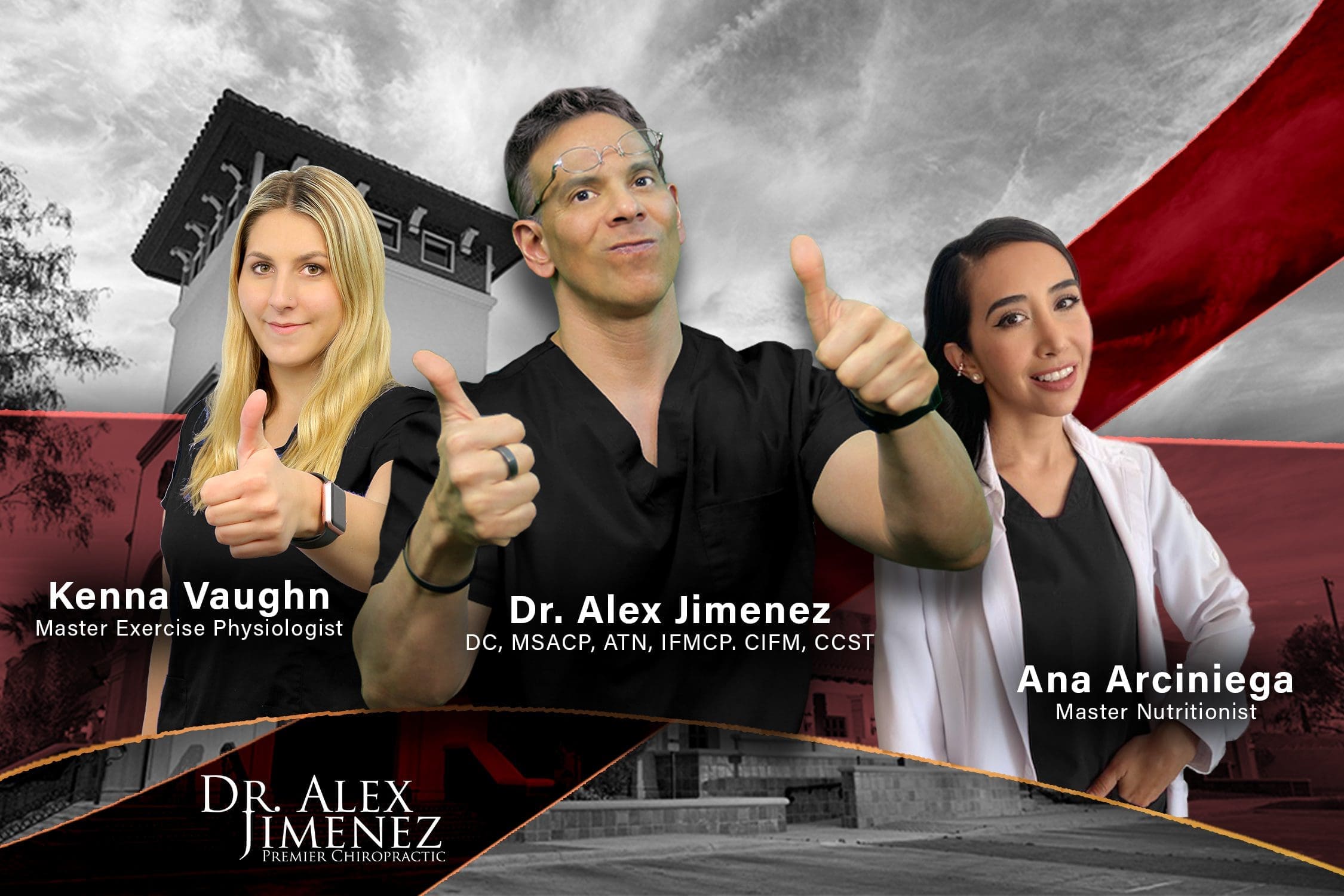
Dr. Alex Jimenez DC, MSACP, APRN, FNP-BC*, CCST, IFMCP, CFMP, ATN
Email: [email protected]
Multidisciplinary Licensing & Board Certifications:
Licensed as a Doctor of Chiropractic (DC) in Texas & New Mexico*
Chiropractic Licenses:
Texas DC License #: TX5807, Verified: TX5807
New Mexico DC License #: NM-DC2182, Verified: NM-DC2182
Nurse Practitioner Licenses:
Texas APRN License #: 1191402, Verified: 1191402 *
New Mexico CNP License #: 90560, Verified 90560
Florida APRN License #: 11043890, Verified: APRN11043890 *
Colorado License #: C-APN.0105610-C-NP, Verified: C-APN.0105610-C-NP
New York License #: N25929, Verified N25929
Georgia APRN License #: GAA-NP005701
Multi-State Advanced Practice Registered Nurse (APRN*) Texas & Multi-States
Multi-state Compact APRN License by Endorsement (43 States)
Compact Status: Multi-State License: Authorized to Practice in 43 States*
Nursing Licensure Compact: Updated Here
DEA Registration: (Drug Enforcement Agency Registered)
All medical (MDs) and family practice providers (FNP-APRN) are registered and licensed to offer various levels of medication.
Verify Providers Here
License Verification Link: Nursys License Verifier
* Prescriptive Authority Authorized (DEA Registered Providers). Call if Required
Board Certification:
ANCC FNP-BC: Board Certified Nurse Practitioner*
Education:
Graduate with Honors: ICHS: MSN-FNP (Family Nurse Practitioner Program)
Degree Granted. Master's in Family Practice, MSN Diploma (Cum Laude)
Dr. Alex Jimenez, DC, APRN, FNP-BC*, CFMP, IFMCP, ATN, CCST
(Board Certified: Family Practice Nurse Practitioner—Multistate)*
(Licensed Nurse Practitioner & Chiropractor - Multistate)*
Clinical Director
DC & FNP License (Review Above)
Digital Business Card
NPI: 1205907805
Dr. Maria Cardenas, MD
(Board Certified: Internal Medicine)
(Licensed Medical Doctor)
Medical Director, Clinical Director & Collaborative Physician
NPI # 1164426748
MD License #: J2933
Licenses and Board Certifications:
MD: Medical Doctor
DC: Doctor of Chiropractic
APRNP: Advanced Practice Registered Nurse
FNP-BC: Family Practice Specialization (Multi-State Board Certified)
FNP-BC: Family Practice Across Life Span (Neonatal to Geriatrics)
RN: Registered Nurse (Multi-State Compact License)
CFMP: Certified Functional Medicine Provider
MSN-FNP: Master of Science in Family Practice Medicine
MSACP: Master of Science in Advanced Clinical Practice
IFMCP: Institute of Functional Medicine
CCST: Certified Chiropractic Spinal Trauma
ATN: Advanced Translational Neutrogenomics
Family with Primary Care Focus (Family Nurse Practitioner or FNP)
- The Family Nurse Practitioner (FNP) promotes, maintains, and restores health for individuals and families across the lifespan. FNPs also identify health risks, promote wellness, and diagnose and manage acute and chronic illness.
- The FNP focuses on comprehensive primary care, promoting healthy lifestyles for patients across the lifespan in settings such as private practice, physician offices, and community health centers.
Memberships & Associations:
TCA: Texas Chiropractic Association: Member ID: 104311
TNA: Texas Nurse Association: Member ID: 06458222
TNP: Texas Nurse Practitioner Association ID: 2025091511
AANP: American Association of Nurse Practitioners: Member ID: 2198960
ANA: American Nurses Association: Member ID: 06458222 (District TX01)
| Primary Taxonomy | Selected Taxonomy | State | License Number |
|---|---|---|---|
| No | 111N00000X - Chiropractor | NM | DC2182 |
| Yes | 111N00000X - Chiropractor | TX | DC5807 |
| Yes | 363LF0000X - Nurse Practitioner - Family | TX | 1191402 |
| Yes | 363LF0000X - Nurse Practitioner - Family | FL | 11043890 |
| Yes | 363LF0000X - Nurse Practitioner - Family | CO | C-APN.0105610-C-NP |
| Yes | 363LF0000X - Nurse Practitioner - Family | NY | N25929 |
| Yes | 363LF0000X - Nurse Practitioner - Family | NM |
90560 |
| Yes | 363LF0000X - Nurse Practitioner - Family | GA | GAA-NP005701 |
Dr. Alex Jimenez, DC, APRN, FNP-BC*, CFMP, IFMCP, ATN, CCST
(Board Certified: Family Practice Nurse Practitioner—Multistate)*
(Primary Care Across Lifespan—Neonatal / Pediatric / Adult / Geriatrics)
(Licensed Nurse Practitioner & Chiropractor - Multistate)*
Clinical Director
Digital Business Card
NPI: 1205907805
Dr. Maria Cardenas, MD
(Board Certified: Internal Medicine)*
(Licensed Medical Doctor)*
Medical Director, Clinical Director & Collaborative Physician
NPI # 1164426748
MD License #: J2933
📆 Schedule Appointment: Schedule 24/7 (Click Here)