Table of Contents
Optimal Joint Movement: What “High-Quality Mobility” Really Means—and How Integrative Chiropractic Care Supports It
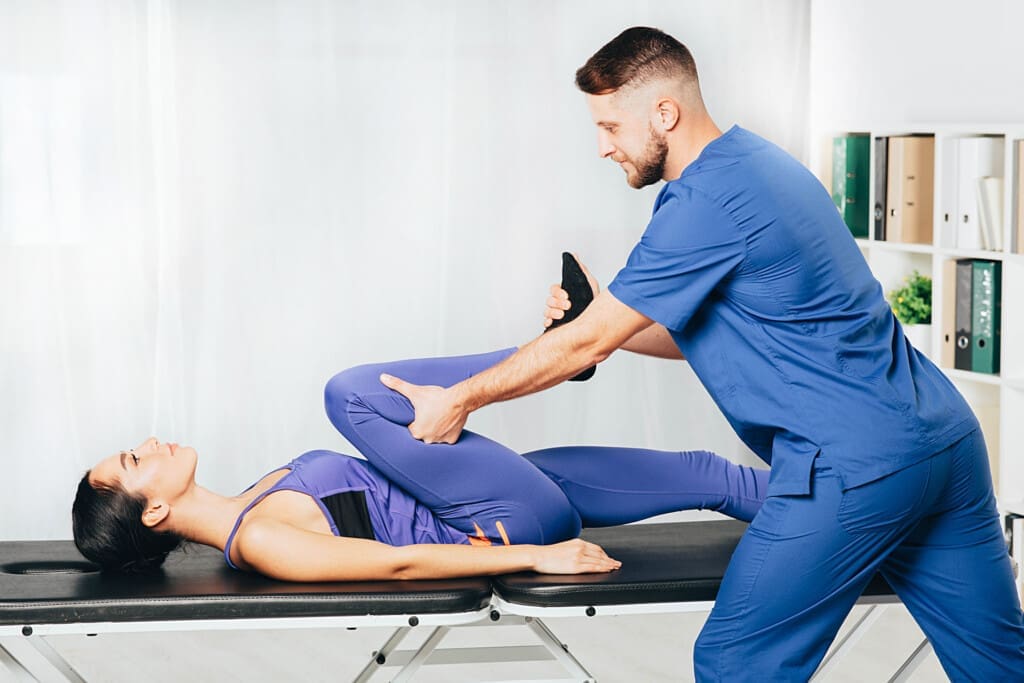
Optimal joint movement means you can move a joint through its full, natural range of motion (ROM) smoothly, with good control, and without pain. It is not just “being flexible.” It is the combination of:
-
Mobility (you can move well, actively, and with control)
-
Stability (you can hold a good joint position and control motion under load)
-
Coordination (your nervous system and muscles work together at the right time)
When this balance is strong, daily activities (walking, reaching, lifting, standing, and squatting) are easier, and sports movements are more powerful and efficient. When the balance is disrupted—often by injury, pain, stress, or long periods of sitting—your body may start to “borrow” motion from other joints. That creates compensations, which can increase strain and the risk of injury over time.
The simple definition: mobility + stability = better movement
A helpful way to remember this:
-
Flexibility = how far a muscle can lengthen
-
Mobility = how well you can move a joint through ROM with active control
-
Stability = how well you can control joint position during motion and load
You can be flexible but still move poorly. For example, someone may have “loose” hips but still lack control, which can lead to hip pinching, low back strain, or knee pain during squats. That is why quality mobility matters more than “stretching more.”
Optimal joint movement is basically:
Enough motion, enough control, and the right timing.
What range of motion is—and why it matters
Range of motion (ROM) is the amount a joint can move in a direction, usually measured in degrees. ROM can be assessed as:
-
Active ROM (AROM): you move it yourself
-
Passive ROM (PROM): someone else moves it for you
In real life, you need active ROM the most because that’s how you move during work, chores, sports, and exercise.
“Normal ROM” is a guide—not a competition
Normative (typical) ROM values exist for many joints, but the goal is not to chase a perfect number. The goal is to regain functional ROM—enough motion to do your activities safely and comfortably.
Here are examples of commonly cited reference ranges (values vary by source, age, and testing method):
-
Neck rotation: often around ~70° in each direction
-
Shoulder flexion: often up to ~180°
-
Knee flexion: many adults function well around ~0–135°
These numbers are helpful, but functional capacity matters most—such as being able to climb stairs, sit, reach overhead, or squat with good form and minimal symptoms.
How reduced mobility creates compensations
When one joint stops moving well, the body often “finds a way” to complete the task by redistributing stress elsewhere.
Common patterns include:
-
Stiff ankles → knees collapse inward, or feet turn out during squats
-
Stiff hips → low back over-moves during bending or running
-
Stiff upper back (thoracic spine) → shoulders overwork during overhead reaching
-
Weak core/hip stability → knees and low back take more load during lifting
This is one reason the joint-by-joint approach is popular in rehabilitation and sports training: many regions tend to alternate between needing more mobility and more stability. If the “mobility” region becomes stiff, the nearby “stability” region may begin moving excessively, which can irritate tissues.
Why the shoulder is a great example of mobility vs. stability
The shoulder is designed for a huge range of motion—reaching in many directions. However, that mobility comes with a trade-off: it can be more vulnerable to instability if the supporting muscles and control systems are not functioning properly.
If the shoulder blade, rotator cuff, and trunk control are off, you might still “have ROM,” but it may be low-quality ROM (pinching, clicking, poor timing, or pain with overhead work).
“End-feel” and why pain-free movement quality matters
Clinicians often assess not only ROM but also how the movement “feels” at the end of the motion (often called end-feel). Different tissues stop motion in different ways—soft tissue stretch, firm capsular resistance, or a hard bony stop. Abnormal end-feel or pain may indicate that a joint is restricted by swelling, spasm, capsule tightness, or other factors that warrant attention.
Bottom line:
Optimal joint movement is not forcing motion. It restores motion in a smooth, controlled, and nonreactive manner.
ROM affects walking, gait, and daily function
Walking seems simple, but it depends on coordinated motion across the ankles, knees, hips, and spine. Reduced joint ROM can alter gait timing and coordination, particularly during the stance and swing phases. When one joint loses motion, other segments may compensate, thereby increasing effort and strain.
Some research on knee ROM, for example, describes how loss of knee flexion or extension can alter gait mechanics and limit activities such as stair climbing, squatting, running, and jumping.
How sedentary behavior and injury reduce mobility
Two big reasons people lose joint mobility are:
-
Prolonged sitting/low movement variety
-
Injury with guarding, swelling, or fear of motion
When you sit a lot, your hips can get stiff, your upper back movement may decrease, and your nervous system may “downshift” the way muscles activate. After injury, the body often tightens as a protective strategy, which can reduce ROM and confidence in movement.
Over time, that can lead to:
-
Increased stiffness and poor circulation in tissues
-
Reduced strength at end ranges
-
Less coordination and balance
-
More strain in neighboring joints
This is why rehab is not just “rest until it goes away.” Most people require a smart return-to-motion with guidance and progression.
Where integrative chiropractic care fits in
Integrative chiropractic care aims to restore joint function by addressing the entire musculoskeletal system, not just one painful site. In real-world practice, this often includes:
-
Joint manipulation/adjustments (when appropriate)
-
Soft tissue therapies (manual therapy, myofascial work, instrument-assisted techniques)
-
Mobility drills and stretching
-
Stability training and movement retraining
-
Lifestyle support (sleep, recovery, inflammation basics, activity planning)
This matters because joint mobility and stability are not separate “parts.” They are connected through your muscles, connective tissue, and nervous system.
Clinical observations from Dr. Alexander Jimenez
Across his clinical education content, a consistent theme is that improved movement tends to happen when care combines:
-
Targeted joint work to reduce restriction and improve ROM
-
Soft tissue approaches to decrease tightness and improve tissue glide
-
Corrective exercise to help the body “keep” the gains through strength and coordination
-
A whole-body view of how the spine, hips, shoulders, and gait mechanics connect
This “adjust + release + retrain” pattern is a practical way many integrative clinics support mobility that actually lasts.
What chiropractic adjustments may support (and what they don’t do)
A chiropractic adjustment is not “magic,” and it is not the full plan by itself. It may help by:
-
Improving joint mechanics and motion segments
-
Reducing pain that blocks normal movement
-
Decreasing protective muscle guarding
-
Supporting better movement input/output in the nervous system
But for long-term success, most people still need strength, control, and repetition of better movement patterns. That is why integrative plans often combine adjustments with movement training and home routines.
Soft tissue therapy: mobility often depends on the tissues around the joint
Muscles, fascia, tendons, and joint capsules can limit ROM, especially after injury or long-term overuse. Soft tissue approaches may help reduce restrictions and improve comfort during movement.
Examples used in rehab settings include:
-
Myofascial release / massage-based care
-
Instrument-assisted soft tissue mobilization (IASTM)
-
Friction massage for scar tissue mobility (when clinically appropriate)
When tissues move better, it can be easier to restore active ROM and improve exercise form.
Why exercise is “joint medicine” when done correctly
Many organizations emphasize that regular, appropriate exercise helps joints by:
-
Reducing stiffness
-
Supporting cartilage nutrition through movement
-
Strengthening muscles that protect joints
-
Improving function and confidence with daily activity
This does not mean “push through sharp pain.” It entails developing a plan that aligns with the person, the joint, and the current tolerance level.
Exercise that often supports joint health includes:
-
Walking and other low-impact cardio
-
Strength training with good form
-
Mobility drills for key stiff regions
-
Balance and control work (especially for hips, ankles, trunk)
A practical “quality mobility” checklist
If you want a simple way to think about optimal joint movement, look for these markers:
-
Smooth motion: no jerky stops, no “catching”
-
Control: you can move slowly and hold positions briefly
-
Symmetry: left and right are reasonably close (not identical, but not extreme)
-
Pain-free or low, manageable discomfort: not sharp, not escalating
-
Better function: stairs, reaching, walking, squatting feel easier
If motion is limited, the goal is not to force it. The goal is to improve the system that supports it: joint mechanics, tissue quality, and neuromuscular control.
Common signs you may have a mobility deficit
People often notice mobility problems as “tightness,” but it may show up in other ways, such as:
-
You can’t squat without heels lifting
-
You rotate your feet out a lot to get depth
-
Your lower back feels tight after sitting
-
You feel a pinching in the front of the hip
-
Overhead reaching causes shoulder irritation
-
Your gait feels uneven, or you limp after activity
-
One knee feels stiff when going downstairs
Mobility deficits often lead to compensatory mechanisms. Addressing the correct joint (rather than just rubbing the painful area) can be a more effective long-term approach.
Putting it together: a simple integrative strategy
A common integrative care “flow” looks like this:
-
Step 1: Assess
-
What joint is limited?
-
What is compensating?
-
What movements trigger symptoms?
-
-
Step 2: Restore motion
-
Joint work (when appropriate)
-
Soft tissue techniques
-
Gentle mobility drills
-
-
Step 3: Build stability
-
Strengthen the support system
-
Train control at the end ranges
-
Improve balance and trunk control
-
-
Step 4: Re-train movement
-
Squat/hinge patterns
-
Overhead mechanics
-
Gait, running, or sport-specific drills
-
-
Step 5: Maintain
-
Short, repeatable home plan
-
Regular movement variety
-
Recovery habits (sleep, stress, activity pacing)
-
This is how mobility becomes “high-quality mobility”—not just temporary looseness.
Safety notes: when to get evaluated
Get medical evaluation sooner (instead of “stretching it out”) if you have:
-
New or worsening numbness/weakness
-
Loss of coordination or balance that is new
-
Severe night pain, fever, or unexplained weight loss
-
A joint that is hot, very swollen, or that cannot bear weight
-
Symptoms after significant trauma (fall, collision, sports impact)

References
-
Flexibility, Mobility, Stability, and Injury Prevention (University of Colorado Anschutz Medical Campus, 2022).
-
Mobility and Stability: Joint Functions When We Move (NASM, n.d.).
-
Joint Mobility & Stability (ACE Fitness, 2019).
-
Range of Motion (Physiopedia, n.d.).
-
Range of Motion Normative Values (Physiopedia, n.d.).
-
The Joint-by-Joint Approach to Physiotherapy: Understanding Knee Pain (Motus Physiotherapy, 2024).
-
The Shoulder: The Most Mobile, and Troublesome, Joint in the Body (Indy Spine, 2019).
-
The Importance of Range of Motion (OneStep, n.d.).
-
How Does Your Range of Motion Impact Your Quality of Walking? (Baliston, 2024).
-
Joint Range of Motion During Gait (Physiopedia, n.d.).
-
Increasing Knee Range of Motion Using a Unique Sustained Stretching Device (Shah et al., 2008).
-
Flexibility and Range of Motion (Jimenez, n.d.).
-
Restore Range of Motion With Chiropractic (Jimenez, n.d.).
-
Chiropractic Care Basics for Joint and Biomechanical Restoration (Jimenez, 2025).
-
Understanding Instrument-Assisted Soft Tissue Mobilization (Jimenez, n.d.).
-
Back Adjustments Should Be Done By A Professional Chiropractor (Jimenez, n.d.).
-
Does Integrated Fixation Provide Benefit in the Reconstruction of Posttraumatic Tibial Bone Defects? (Bernstein et al., 2015).
-
Exercise Helps Ease Arthritis Pain and Stiffness (Mayo Clinic, n.d.).
-
Why Improve Joint Movement for Sporting Success? (Activ Therapy, 2024).
Professional Scope of Practice *
The information herein on "High-Quality Mobility and Joint Pain Relief" is not intended to replace a one-on-one relationship with a qualified health care professional or licensed physician and is not medical advice. We encourage you to make healthcare decisions based on your research and partnership with a qualified healthcare professional.
Blog Information & Scope Discussions
Welcome to El Paso's Premier Wellness and Injury Care Clinic & Wellness Blog, where Dr. Alex Jimenez, DC, FNP-C, a Multi-State board-certified Family Practice Nurse Practitioner (FNP-BC) and Chiropractor (DC), presents insights on how our multidisciplinary team is dedicated to holistic healing and personalized care. Our practice aligns with evidence-based treatment protocols inspired by integrative medicine principles, similar to those found on this site and our family practice-based chiromed.com site, focusing on restoring health naturally for patients of all ages.
Our areas of multidisciplinary practice include Wellness & Nutrition, Chronic Pain, Personal Injury, Auto Accident Care, Work Injuries, Back Injury, Low Back Pain, Neck Pain, Migraine Headaches, Sports Injuries, Severe Sciatica, Scoliosis, Complex Herniated Discs, Fibromyalgia, Chronic Pain, Complex Injuries, Stress Management, Functional Medicine Treatments, and in-scope care protocols.
Our information scope is multidisciplinary, focusing on musculoskeletal and physical medicine, wellness, contributing etiological viscerosomatic disturbances within clinical presentations, associated somato-visceral reflex clinical dynamics, subluxation complexes, sensitive health issues, and functional medicine articles, topics, and discussions.
We provide and present clinical collaboration with specialists from various disciplines. Each specialist is governed by their professional scope of practice and their jurisdiction of licensure. We use functional health & wellness protocols to treat and support care for musculoskeletal injuries or disorders.
Our videos, posts, topics, and insights address clinical matters and issues that are directly or indirectly related to our clinical scope of practice.
Our office has made a reasonable effort to provide supportive citations and has identified relevant research studies that support our posts. We provide copies of supporting research studies upon request to regulatory boards and the public.
We understand that we cover matters that require an additional explanation of how they may assist in a particular care plan or treatment protocol; therefore, to discuss the subject matter above further, please feel free to ask Dr. Alex Jimenez, DC, APRN, FNP-BC, or contact us at 915-850-0900.
We are here to help you and your family.
Blessings
Dr. Alex Jimenez DC, MSACP, APRN, FNP-BC*, CCST, IFMCP, CFMP, ATN
email: [email protected]
Multidisciplinary Licensing & Board Certifications:
Licensed as a Doctor of Chiropractic (DC) in Texas & New Mexico*
Texas DC License #: TX5807, Verified: TX5807
New Mexico DC License #: NM-DC2182, Verified: NM-DC2182
Multi-State Advanced Practice Registered Nurse (APRN*) in Texas & Multi-States
Multi-state Compact APRN License by Endorsement (42 States)
Texas APRN License #: 1191402, Verified: 1191402 *
Florida APRN License #: 11043890, Verified: APRN11043890 *
Colorado License #: C-APN.0105610-C-NP, Verified: C-APN.0105610-C-NP
New York License #: N25929, Verified N25929
License Verification Link: Nursys License Verifier
* Prescriptive Authority Authorized
ANCC FNP-BC: Board Certified Nurse Practitioner*
Compact Status: Multi-State License: Authorized to Practice in 40 States*
Graduate with Honors: ICHS: MSN-FNP (Family Nurse Practitioner Program)
Degree Granted. Master's in Family Practice MSN Diploma (Cum Laude)
Dr. Alex Jimenez, DC, APRN, FNP-BC*, CFMP, IFMCP, ATN, CCST
(Board Certified: Family Practice Nurse Practitioner—Multistate)*
(Licensed Nurse Practitioner & Chiropractor - Multistate)*
Clinical Director
Digital Business Card
Dr. Maria Cardenas, MD
(Board Certified: Internal Medicine)
(Licensed Medical Doctor)
Medical Director, Clinical Director & Collaborative Physician
NPI # 1164426749
MD License #: J2933
Licenses and Board Certifications:
MD: Medical Doctor
DC: Doctor of Chiropractic
APRNP: Advanced Practice Registered Nurse
FNP-BC: Family Practice Specialization (Multi-State Board Certified)
RN: Registered Nurse (Multi-State Compact License)
CFMP: Certified Functional Medicine Provider
MSN-FNP: Master of Science in Family Practice Medicine
MSACP: Master of Science in Advanced Clinical Practice
IFMCP: Institute of Functional Medicine
CCST: Certified Chiropractic Spinal Trauma
ATN: Advanced Translational Neutrogenomics
Memberships & Associations:
TCA: Texas Chiropractic Association: Member ID: 104311
AANP: American Association of Nurse Practitioners: Member ID: 2198960
ANA: American Nurse Association: Member ID: 06458222 (District TX01)
TNA: Texas Nurse Association: Member ID: 06458222
NPI: 1205907805
| Primary Taxonomy | Selected Taxonomy | State | License Number |
|---|---|---|---|
| No | 111N00000X - Chiropractor | NM | DC2182 |
| Yes | 111N00000X - Chiropractor | TX | DC5807 |
| Yes | 363LF0000X - Nurse Practitioner - Family | TX | 1191402 |
| Yes | 363LF0000X - Nurse Practitioner - Family | FL | 11043890 |
| Yes | 363LF0000X - Nurse Practitioner - Family | CO | C-APN.0105610-C-NP |
| Yes | 363LF0000X - Nurse Practitioner - Family | NY | N25929 |
Dr. Alex Jimenez, DC, APRN, FNP-BC*, CFMP, IFMCP, ATN, CCST
(Board Certified: Family Practice Nurse Practitioner—Multistate)*
(Licensed Nurse Practitioner & Chiropractor - Multistate)*
Clinical Director
Digital Business Card
Dr. Maria Cardenas, MD
(Board Certified: Internal Medicine)*
(Licensed Medical Doctor)*
Medical Director, Clinical Director & Collaborative Physician
NPI # 1164426749
MD License #: J2933