Table of Contents
Can PRP Therapy Help Posture Problems? How Regenerative Care May Reduce Pain, Improve Stability, and Support Better Alignment
Poor posture is not always just a bad habit. Sometimes it is driven by pain, weak supporting tissues, disc degeneration, shoulder dysfunction, or ligament strain that makes it hard to sit, stand, and move well. Platelet-rich plasma, or PRP, may help in those cases by lowering inflammation and supporting tissue repair. Still, PRP is not a direct posture correction tool. It helps best when posture problems are tied to injury, instability, or chronic pain rather than habit alone. (Akeda et al., 2019; Johns Hopkins Medicine, n.d.; Washington University Orthopedics, n.d.)

PRP is made from a small sample of a patient’s own blood. The sample is centrifuged to concentrate the platelets. Those platelets contain growth factors and other proteins involved in healing. Once injected into an injured area, PRP may help stimulate tissue repair, reduce inflammation, and support recovery in tendons, ligaments, joints, and some spine-related structures. (Johns Hopkins Medicine, n.d.; Washington University Orthopedics, n.d.; Riverside Health, 2025)
Why posture problems can be linked to pain and tissue damage
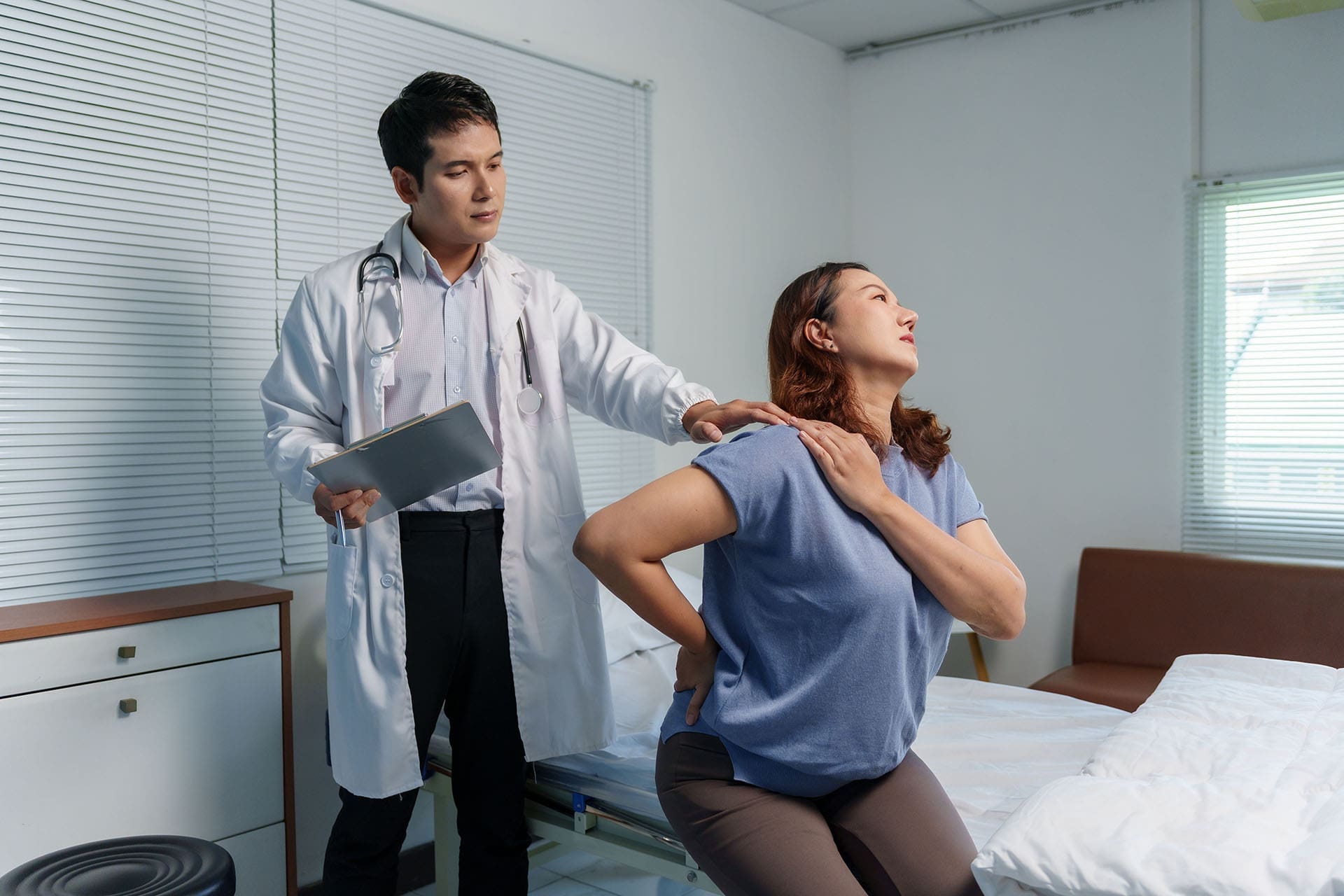
Good posture depends on more than willpower. The body needs enough mobility, strength, tissue integrity, and comfort to hold healthy alignment. When the neck, back, shoulders, or pelvis hurt, the body often shifts into protective movement patterns. Over time, those patterns can become the new normal. This is one reason why people with chronic back pain, disc problems, shoulder injuries, or ligament strain may look slouched, guarded, or uneven. (All Well Scoliosis Centre, n.d.; Saks Wellness Center, 2025; Integrity Chiropractic & Wellness, n.d.)
Posture is also strongly shaped by repetition. One of the most important points from the posture resources you shared is that exercise alone does not automatically fix daily posture habits. If someone works out for a short time but spends the rest of the day in the same poor sitting or standing pattern, the body tends to return to that dominant pattern. That means habit retraining, ergonomic changes, and corrective exercise still matter even when pain improves. (All Well Scoliosis Centre, n.d.; Aligned Modern Health, n.d.)
How PRP may help posture indirectly
PRP may improve posture indirectly in several ways:
- It may reduce the pain that causes guarded movement.
- It may support healing in injured tendons and ligaments.
- It may improve function in painful joints.
- It may help some patients with disc-related back pain or mild to moderate spinal degeneration.
- It may support the recovery of shoulder tissues that affect upper-body alignment.
These effects can make it easier for a person to tolerate upright sitting, walking, reaching, lifting, and exercise. In other words, PRP may create a better physical foundation for posture correction, even though the injection itself does not teach posture habits. (Akeda et al., 2019; Johns Hopkins Medicine, n.d.; Morrison Clinic, n.d.; Princeton Sports and Family Medicine, n.d.)
For spine-related pain
The evidence is promising but still developing. A critical review of PRP for chronic low back pain reported that published clinical studies generally found PRP to be safe and effective in reducing back pain, but the authors also stressed that high-quality evidence remains limited and that larger studies are needed. This matters because disc and low back pain often affect posture by causing stiffness, reduced confidence in movement, and altered biomechanics. (Akeda et al., 2019)
Some spine-focused clinical resources state that PRP may be used for disc degeneration, chronic low back pain, tendon-related spine pain, and certain joint irritation around the spine. These sources describe PRP as a way to deliver growth factors to damaged tissue to support repair and reduce inflammation, especially when standard care has not provided lasting relief. (Morrison Clinic, n.d.; Desert Spine and Sports Physicians, 2025; Washington University Orthopedics, n.d.)
PRP may also matter for the shoulders, which are a major part of posture. Rounded shoulders, guarding, and uneven upper body mechanics are common when the rotator cuff is irritated or weak. One of your sources explains that PRP may support tendon cell activity, collagen production, reduced inflammation, and functional recovery in rotator cuff injuries. Better shoulder comfort and range of motion can help people hold the chest and upper back in a more balanced position. (Princeton Sports and Family Medicine, n.d.; Washington University Orthopedics, n.d.)
What PRP cannot do by itself
PRP is not a shortcut for habit-based posture problems. If a person slouches because of long hours at a desk, weak postural endurance, poor workstation setup, or repeated phone use, an injection alone will not retrain the brain and body to move differently. PRP can calm pain and improve tissue quality, but it does not replace posture drills, strengthening, mobility work, or daily movement awareness. (All Well Scoliosis Centre, n.d.; Riverside Health, 2025; Aligned Modern Health, n.d.)
That is why the most balanced view is this: PRP may help remove some barriers to better posture, but posture correction still requires a full rehab plan. People usually do best when pain relief, joint mechanics, muscle retraining, and daily habits are addressed together. Riverside Health specifically notes that PRP tends to work better when paired with physical therapy, joint-stabilization exercises, weight management when needed, and healthy lifestyle changes. (Riverside Health, 2025)
When PRP may be a reasonable option
PRP is often considered when a patient has ongoing musculoskeletal pain, mild to moderate tissue damage, or a lingering injury that has not improved enough with rest, medication, physical therapy, or standard injections. Some of the sources you provided say that better candidates are usually people with mild to moderate joint, tendon, ligament, or spine problems who are otherwise in fairly good health and are looking for a non-surgical option. (Desert Spine and Sports Physicians, 2025; Riverside Health, 2025; Washington University Orthopedics, n.d.)
PRP is also usually described as low risk because it uses the patient’s own blood, which reduces the risk of an allergic reaction. Even so, it is a medical procedure with potential side effects and limitations. Reported risks include soreness, bruising, bleeding, infection, tissue damage, and nerve injury. Washington University Orthopedics also notes that PRP is considered investigational for many musculoskeletal uses and that results vary by case. (Johns Hopkins Medicine, n.d.; Washington University Orthopedics, n.d.; MidJersey Orthopaedics, n.d.)
Why integrative chiropractic care matters for posture correction
The chiropractic posture sources in your list all point to the same idea: posture improves most when clinicians identify the root cause, restore joint mobility, reduce muscle tension, and strengthen stabilizing muscles. Adjustments may help improve alignment and motion. Soft tissue care may reduce tightness. Corrective exercise helps strengthen the core, glutes, upper back, and other stabilizers so the body can maintain better alignment between visits. (Aligned Modern Health, n.d.; Integrity Chiropractic & Wellness, n.d.; Saks Wellness Center, 2025; VASSI, n.d.)
This is exactly why PRP and posture care can fit together. PRP may improve the health of painful or unstable tissues, while chiropractic and rehabilitation help the body use those improved tissues more effectively. If tissue healing improves but movement patterns do not change, the person may still return to the same posture-related stress. If movement training improves but the tissue remains inflamed and painful, progress may stall. Together, these methods can be more useful than either one alone. (Riverside Health, 2025; Aligned Modern Health, n.d.; Morrison Clinic, n.d.)
Clinical observations from Dr. Alexander Jimenez, DC, APRN, FNP-BC
Based on clinical resources published on Dr. Alexander Jimenez’s website and LinkedIn profile, Dr. Jimenez presents PRP as part of a broader dual-scope model that combines chiropractic care with nurse-practitioner-level medical assessment. His online materials describe a broader clinical view, coordinated decision-making, and an approach that connects patient history, exam findings, imaging, rehabilitation, and regenerative procedures. His profile also identifies him as a DC, APRN, and FNP-BC, with additional training in functional and integrative medicine. (Jimenez, n.d.; LinkedIn, n.d.)
In related clinical posts, Dr. Jimenez’s team describes combining PRP with ultrasound-guided placement, chiropractic adjustments, posture and gait analysis, exercise-based rehabilitation, and nutrition-oriented support. Those observations are consistent with the idea that posture problems often need both tissue healing and mechanical retraining. In that model, PRP helps the damaged area, while chiropractic and rehab help the body move better afterward. (Health Coach Clinic, 2026; Jimenez, 2026)
A practical summary
PRP can help with some posture-related problems, but mostly indirectly. It may be useful when poor posture is being driven by pain, disc degeneration, tendon injury, ligament weakness, or shoulder dysfunction. It is less likely to solve a purely habit-based slouch on its own. The best results usually come from a combined plan that includes:
- A proper diagnosis
- Image-guided PRP when appropriate
- Chiropractic or manual care to improve joint mechanics
- Corrective exercise and stabilization work
- Posture retraining and ergonomic changes
- Nutrition and lifestyle strategies that support healing
That is why many patients seek an integrative, natural, non-surgical model after more standard options have failed. The goal is not simply to cover pain, but to improve tissue health, restore movement, and make better posture easier to maintain in daily life. (Akeda et al., 2019; Riverside Health, 2025; Health Coach Clinic, 2026; Washington University Orthopedics, n.d.)
References
- Akeda, K., Yamada, J., Linn, E. T., Sudo, A., & Masuda, K. (2019). Platelet-rich plasma in the management of chronic low back pain: A critical review. Journal of Pain Research, 12, 753-767.
- Aligned Modern Health. (n.d.). How Chiropractic Care Improves Posture and Alignment.
- All Well Scoliosis Centre. (n.d.). Can Posture Really Change? How Repetition Retrains the Brain and Spine.
- Desert Spine and Sports Physicians. (2025, April 21). Who is a Good Candidate for PRP Therapy?.
- Health Coach Clinic. (2026). PRP Therapy for Spine Pain Relief and Healing.
- Health Coach Clinic. (2026). Regenerative Medicine and Integrative Chiropractic Care: A Natural, Non-Surgical Path to Recovery.
- Integrity Chiropractic & Wellness. (n.d.). Effective Ways a Chiropractor Can Help With Fixing Posture.
- Jimenez, A. (n.d.). Dr. Alex Jimenez DC, APRN, FNP-BC, CFMP, IFMCP.
- Jimenez, A. (2026). Overtraining the Core and Chiropractic Care in El Paso.
- Johns Hopkins Medicine. (n.d.). Platelet-Rich Plasma (PRP) Injections.
- LinkedIn. (n.d.). Dr. Alexander Jimenez DC, APRN, FNP-BC, IFMCP, CFMP, ATN.
- MidJersey Orthopaedics. (n.d.). Is Platelet-Rich Plasma (PRP) Therapy Safe?.
- Morrison Clinic. (n.d.). Platelet Rich Plasma Therapy for Spine: Effectiveness, Safety, and Clinical Applications.
- Princeton Sports and Family Medicine. (n.d.). Shoulder Salvation: Exploring Platelet-Rich Plasma (PRP) Therapy for Rotator Cuff Injuries.
- Riverside Health. (2025, July 30). Platelet-Rich Plasma (PRP) Therapy: A Non-Surgical Option for Chronic Pain.
- Saks Wellness Center. (2025, September 16). How Chiropractic Clinics Help With Posture Correction.
- VASSI. (n.d.). Overview of Services.
- Washington University Orthopedics. (n.d.). Platelet-Rich Plasma (PRP) Treatment.
Professional Scope of Practice *
The information herein on "PRP Therapy Can Help Posture Problems and Pain" is not intended to replace a one-on-one relationship with a qualified health care professional or licensed physician and is not medical advice. We encourage you to make healthcare decisions based on your research and partnership with a qualified healthcare professional.
Blog Information & Scope Discussions
Welcome to El Paso's Premier Wellness and Injury Care Clinic & Wellness Blog, where Dr. Alex Jimenez, DC, FNP-C, a Multi-State board-certified Family Practice Nurse Practitioner (FNP-BC) and Chiropractor (DC), presents insights on how our multidisciplinary team is dedicated to holistic healing and personalized care. Our practice aligns with evidence-based treatment protocols inspired by integrative medicine principles, similar to those found on this site and our family practice-based chiromed.com site, focusing on restoring health naturally for patients of all ages.
Our areas of multidisciplinary practice include Wellness & Nutrition, Chronic Pain, Personal Injury, Auto Accident Care, Work Injuries, Back Injury, Low Back Pain, Neck Pain, Migraine Headaches, Sports Injuries, Severe Sciatica, Scoliosis, Complex Herniated Discs, Fibromyalgia, Chronic Pain, Complex Injuries, Stress Management, Functional Medicine Treatments, and in-scope care protocols.
Our information scope is multidisciplinary, focusing on musculoskeletal and physical medicine, wellness, contributing etiological viscerosomatic disturbances within clinical presentations, associated somato-visceral reflex clinical dynamics, subluxation complexes, sensitive health issues, and functional medicine articles, topics, and discussions.
We provide and present clinical collaboration with specialists from various disciplines. Each specialist is governed by their professional scope of practice and their jurisdiction of licensure. We use functional health & wellness protocols to treat and support care for musculoskeletal injuries or disorders.
Our videos, posts, topics, and insights address clinical matters and issues that are directly or indirectly related to our clinical scope of practice.
Our office has made a reasonable effort to provide supportive citations and has identified relevant research studies that support our posts. We provide copies of supporting research studies upon request to regulatory boards and the public.
We understand that we cover matters that require an additional explanation of how they may assist in a particular care plan or treatment protocol; therefore, to discuss the subject matter above further, please feel free to ask Dr. Alex Jimenez, DC, APRN, FNP-BC, or contact us at 915-850-0900.
We are here to help you and your family.
Blessings
Dr. Alex Jimenez DC, MSACP, APRN, FNP-BC*, CCST, IFMCP, CFMP, ATN
email: [email protected]
Multidisciplinary Licensing & Board Certifications:
Licensed as a Doctor of Chiropractic (DC) in Texas & New Mexico*
Texas DC License #: TX5807, Verified: TX5807
New Mexico DC License #: NM-DC2182, Verified: NM-DC2182
Multi-State Advanced Practice Registered Nurse (APRN*) in Texas & Multi-States
Multi-state Compact APRN License by Endorsement (42 States)
Texas APRN License #: 1191402, Verified: 1191402 *
Florida APRN License #: 11043890, Verified: APRN11043890 *
Colorado License #: C-APN.0105610-C-NP, Verified: C-APN.0105610-C-NP
New York License #: N25929, Verified N25929
License Verification Link: Nursys License Verifier
* Prescriptive Authority Authorized
ANCC FNP-BC: Board Certified Nurse Practitioner*
Compact Status: Multi-State License: Authorized to Practice in 40 States*
Graduate with Honors: ICHS: MSN-FNP (Family Nurse Practitioner Program)
Degree Granted. Master's in Family Practice MSN Diploma (Cum Laude)
Dr. Alex Jimenez, DC, APRN, FNP-BC*, CFMP, IFMCP, ATN, CCST
My Digital Business Card
Licenses and Board Certifications:
DC: Doctor of Chiropractic
APRNP: Advanced Practice Registered Nurse
FNP-BC: Family Practice Specialization (Multi-State Board Certified)
RN: Registered Nurse (Multi-State Compact License)
CFMP: Certified Functional Medicine Provider
MSN-FNP: Master of Science in Family Practice Medicine
MSACP: Master of Science in Advanced Clinical Practice
IFMCP: Institute of Functional Medicine
CCST: Certified Chiropractic Spinal Trauma
ATN: Advanced Translational Neutrogenomics
Memberships & Associations:
TCA: Texas Chiropractic Association: Member ID: 104311
AANP: American Association of Nurse Practitioners: Member ID: 2198960
ANA: American Nurse Association: Member ID: 06458222 (District TX01)
TNA: Texas Nurse Association: Member ID: 06458222
NPI: 1205907805
| Primary Taxonomy | Selected Taxonomy | State | License Number |
|---|---|---|---|
| No | 111N00000X - Chiropractor | NM | DC2182 |
| Yes | 111N00000X - Chiropractor | TX | DC5807 |
| Yes | 363LF0000X - Nurse Practitioner - Family | TX | 1191402 |
| Yes | 363LF0000X - Nurse Practitioner - Family | FL | 11043890 |
| Yes | 363LF0000X - Nurse Practitioner - Family | CO | C-APN.0105610-C-NP |
| Yes | 363LF0000X - Nurse Practitioner - Family | NY | N25929 |
Dr. Alex Jimenez, DC, APRN, FNP-BC*, CFMP, IFMCP, ATN, CCST
My Digital Business Card